


Your first MAT appointment at HealthWorksPros may lead to medication that day, but a prescription isn’t automatic across New Jersey facilities. Knowing what to expect at your first MAT appointment means understanding that the clinician will review your health, substance use, current medicines, and whether it’s appropriate to start medication then. If buprenorphine is considered, timing matters: starting too soon can trigger difficult withdrawal symptoms.
A first visit can feel overwhelming, especially if you’re unsure what to share or worried about being judged. You can talk openly about your concerns, ask about medication options and side effects, and discuss support that feels manageable. This guide explains what an initial assessment may include, when medication could start, and how follow-up visits and medication adjustments can shape care throughout New Jersey. It also explains how methadone program routines may differ, so you have a clearer sense of what comes next.
Key Takeaways
- Medication may begin at your first visit when your health and withdrawal status make it appropriate; timing is especially important with buprenorphine.
- Sharing concerns about stigma, readiness, substance use, and past treatment helps shape a more informed care conversation.
- Follow-up visits can help monitor your response and adjust your treatment plan as needed.
- Methadone program attendance and take-home arrangements can differ, so learn how those requirements fit into ongoing care.
Will I Get Suboxone or Other Medications on My First Visit?
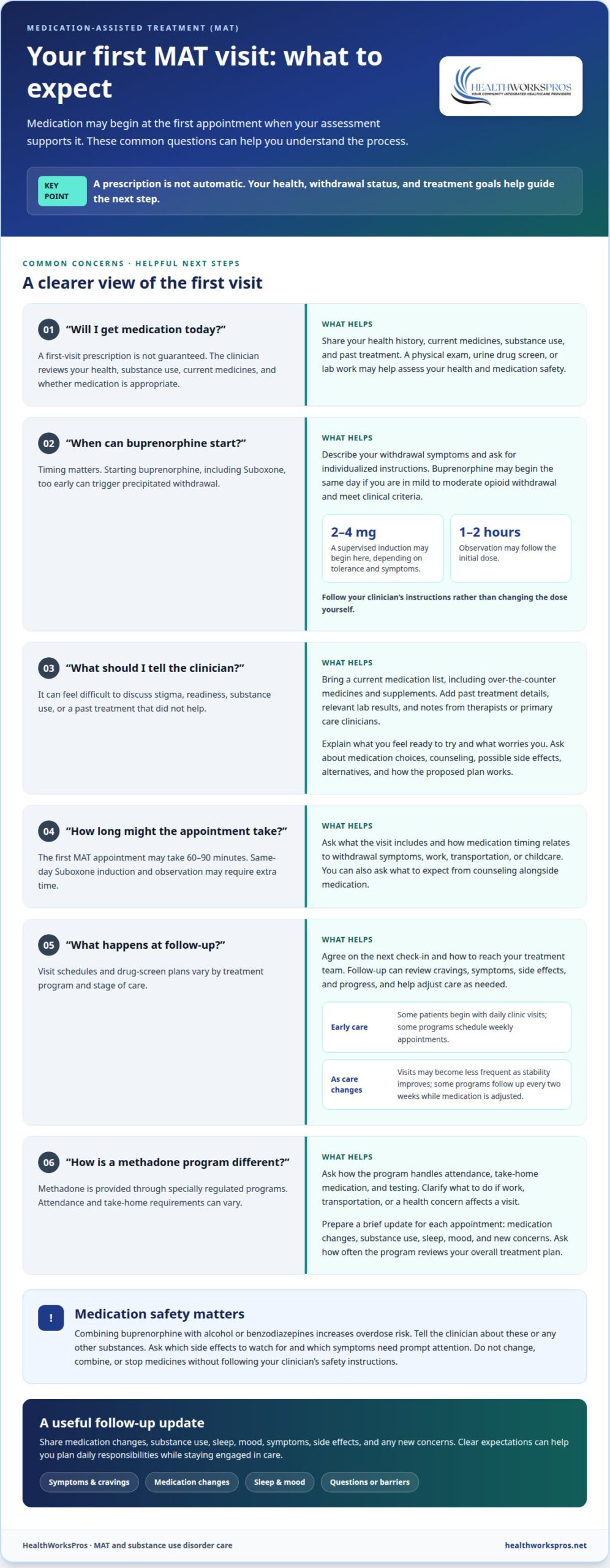
Medication may begin at your first visit if the assessment supports it. Knowing what to expect at your first MAT appointment includes understanding how your health, withdrawal status, and treatment goals inform the next steps.
-
Discuss First-Visit Prescribing
Share your health history, current medicines, substance use, and past treatment during the assessment. The clinician may use this information to consider medication options and whether further evaluation is needed. A physical exam, urine drug screen, or lab work may help assess your health and medication safety. Ask how counseling could support recovery alongside medication. In discussing appointment confidentiality, the U.S. Congress identifies HIPAA as the Health Insurance Portability and Accountability Act of 1996.
-
Begin Induction and Stabilization
Describe your withdrawal symptoms and ask for individualized instructions about when to start medication. Buprenorphine, including Suboxone, may begin the same day if you’re in mild to moderate opioid withdrawal and meet clinical criteria. Starting too early can trigger precipitated withdrawal. A supervised induction may begin with 2-4 mg, depending on tolerance and symptoms, followed by observation for 1-2 hours. Follow your clinician’s instructions rather than changing the dose yourself.
-
Review Medication Risks and Safety
Ask which side effects to watch for and which symptoms need prompt attention. Combining buprenorphine with alcohol or benzodiazepines increases overdose risk, so tell the clinician about their use and any other substances. Methadone and buprenorphine are medication options for opioid use disorder. Discuss whether counseling and ongoing support may fit your plan. Don’t change, combine, or stop medicines without following your clinician’s safety instructions.
Patient concerns about stigma, readiness, and past treatment
Bring a current medication list, including over-the-counter medicines and supplements. Add past treatment details, relevant lab results, and notes from therapists or primary care clinicians.
- Share concerns about stigma, addiction, or a past treatment that didn’t help. Describe what felt difficult, such as side effects, cravings, or barriers to attending therapy. Include mental health history and other substance use; these details help providers understand your experience and discuss a treatment plan without reducing you to a diagnosis.
- Explain what you feel ready to try and what worries you. Before agreeing, ask the clinician to explain the proposed plan, medication choices, counseling, possible side effects, and alternatives. Informed consent means understanding the care being offered and having room to raise concerns. You can also ask how therapy may support recovery alongside medication.
- Plan for the possibility of treatment starting on the first visit. A first MAT appointment may take 60-90 minutes, with extra time for same-day Suboxone induction and observation. Ask what the visit includes and how medication timing relates to withdrawal symptoms, work, transportation, or childcare.
- Ask how the schedule may change as treatment progresses. Some patients begin with daily clinic visits and move to fewer appointments as stability improves. Clarify the expected visit frequency and time commitment, then ask what changes you should report. Useful questions include: “How will we review my progress?” and “What should I do if this plan isn’t working for me?”
Follow-up care and methadone program requirements
- Before leaving your first visit, agree on the next check-in and how to reach your treatment team. Follow-up visits help clinicians review cravings, symptoms, side effects, and progress. Share changes in your mental health, including anxiety, so the clinician can consider your current needs and history.
- Ask how often visits and drug screens are planned during treatment initiation and stabilization. Some patients begin with daily clinic visits, then move to fewer appointments as stability improves. Other programs schedule weekly appointments early in care or follow up every two weeks while medication is being adjusted. Your treatment plan should explain what each visit will cover.
- If you’re considering methadone for opioid use disorder, ask how the program handles attendance and take-home medication. Methadone is provided through specially regulated programs, and attendance and take-home requirements vary. Clarify the schedule and testing process, and ask what to do if work, transportation, or a health concern affects a visit.
- Prepare a brief update for each appointment: medication changes, substance use, sleep, mood, and any new concerns. Regular check-ins help providers track progress and adjust care. Ask how often the program reviews your overall treatment plan. Some programs describe comprehensive reviews every quarter. Clear expectations can help you plan daily responsibilities while staying engaged in care.
Contact the care team about MAT follow-up
Ask your clinician whether routine appointments or drug testing are needed and how often, since this depends on your treatment program. Be honest about drug use; it can help guide your care.
HealthWorksPros
HealthWorksPros offers MAT and SUD Services, along with Primary Health Care and Individual Counseling. Primary Health Care gives you a place to discuss general health concerns, while Individual Counseling offers space to talk through stress, recovery goals, and personal challenges. These services can support your broader health and emotional well-being as you consider treatment.
You don’t need to resolve every concern before reaching out. Tell HealthWorksPros what support you’re looking for, whether you want to discuss a health concern or explore counseling. The team can help you understand relevant care options.
Contact HealthWorksPros to discuss your health or counseling needs.
Take the next step at your own pace
Knowing what to expect at your first MAT appointment can help you feel more prepared to discuss your goals. You don’t need to resolve every concern before reaching out. A conversation with HealthWorksPros can help you explain what support you’re seeking and raise any remaining questions about MAT.
HealthWorksPros offers MAT and SUD Services. You can discuss your situation and explore whether this care fits your needs, without pressure to make every decision at once.
Each honest conversation can help you take a thoughtful next step toward support.
Frequently Asked Questions
What Should I Expect at My First MAT Appointment?
The visit may include a structured tool, such as the Addiction Severity Index, to explore how opioid use affects daily life. Topics can include physical health, relationships, employment, and legal concerns. The tool can help organize information that may be difficult to cover in an open-ended conversation. You can ask the clinician to explain any question or assessment before continuing.
What Will Your Doctor Ask You?
Questions may cover whether chronic pain, such as TMJ pain, affects your health or routines, and whether court dates or child welfare concerns affect your care. The clinician may also ask whether you’re working, seeking work, or facing barriers to stable employment. You can start by sharing what you feel comfortable discussing and ask how personal details relate to your care.
What happens at my first MAT appointment?
An in-person visit may include checks of blood pressure, heart rate, and temperature as part of a basic physical exam. For a telehealth intake, find a private, quiet place where you can speak openly. Keep paper and a pen nearby to note instructions or questions that come up during the conversation.
Can I continue working while in MAT?
Work may remain part of your routine, but consider how treatment and medication effects could fit your duties. If your job involves driving or operating equipment, ask the prescriber how possible side effects could affect alertness before performing those tasks. Planning around appointments and discussing practical concerns can help you make informed decisions about your schedule.
Can I start the same day I walk in?
Same-day medication may be an option, but walking in doesn’t by itself mean treatment starts that day. For buprenorphine, the prescriber considers withdrawal status and clinical suitability. If medication doesn’t begin during the visit, ask about the next step and how to follow the instructions safely while you wait.

Article by
HealthWorksPros Clinical Editorial Team
This article was reviewed by the HealthWorksPros clinical and healthcare communications team. HealthWorksPros (HWP) is an integrated healthcare organization providing evidence-based primary care, behavioral health, psychiatry, counseling, occupational medicine, telehealth, and substance use treatment to individuals, families, employers, and communities throughout Northern New Jersey. Our content is created to educate and inform and is reviewed for medical accuracy using current clinical standards and trusted healthcare resources. While our articles provide general health information, they are not a substitute for personalized medical advice, diagnosis, or treatment. If you have questions about your health or need medical care, schedule an appointment with one of our healthcare providers.
Disclaimer
The information provided on this website is for general educational and informational purposes only and is not intended as medical advice, diagnosis, or treatment. Content is reviewed for accuracy at the time of publication but should not be considered a substitute for professional medical evaluation or personalized healthcare recommendations.
Always seek the advice of your physician or another qualified healthcare provider regarding any medical condition or before starting, stopping, or changing any treatment. Never disregard professional medical advice or delay seeking care because of information you have read on this website.
If you believe you are experiencing a medical emergency, call 911 or go to the nearest emergency department immediately.
Use of this website does not establish a physician-patient relationship with HealthWorksPros (HWP) or any of its providers. Appointment requests or communications submitted through this website do not guarantee the establishment of a provider-patient relationship until you have been evaluated and accepted for care in accordance with applicable laws and professional standards.