


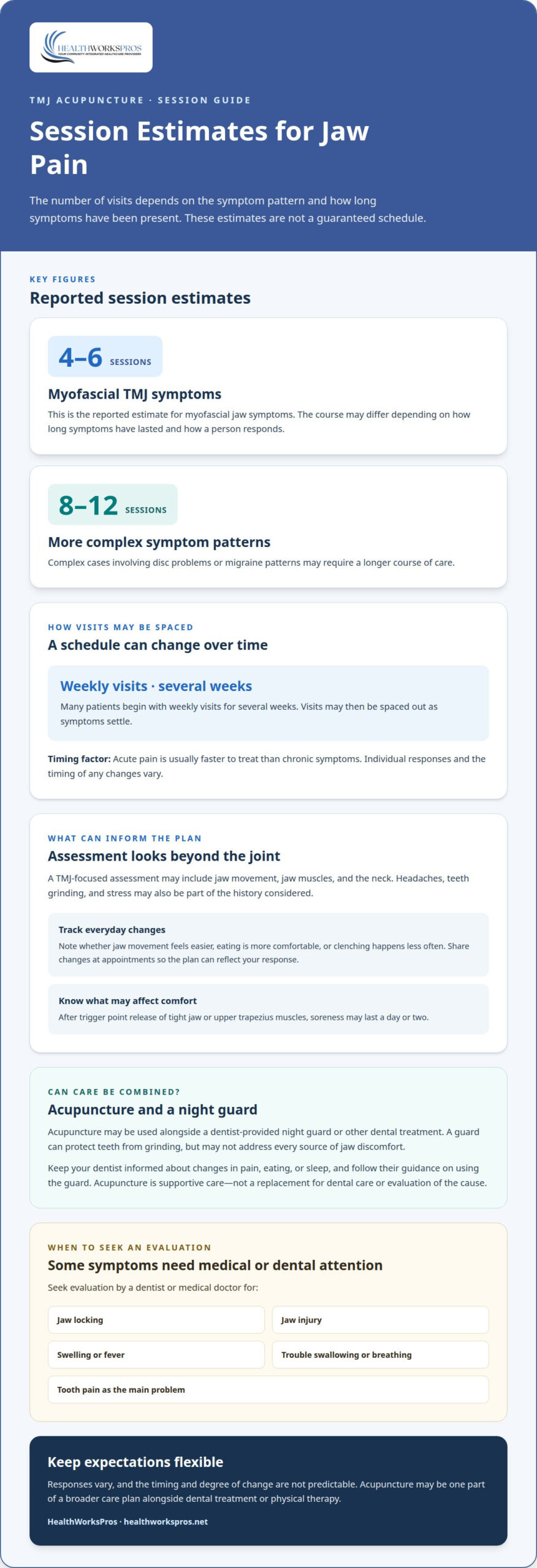
There isn’t one session count that fits every case of TMJ pain. Acupuncture for TMJ pain in Clifton may involve 4-6 sessions for myofascial symptoms, while complex cases involving disc problems or migraine patterns may require 8-12 sessions. How long symptoms have been present also matters.
It makes sense to want a clear idea of the time involved, especially when jaw pain affects chewing, sleep, or everyday comfort. Acupuncture may be used as supportive care alongside a dentist-provided night guard or other dental treatment.
Learn what can affect the number of sessions, what acupuncture care may involve, and how it can fit alongside a night guard. You’ll also find out when jaw symptoms warrant medical or dental evaluation, helping you decide on an informed next step.
Key Takeaways
- Jaw symptoms can be influenced by factors beyond the joint, including clenching, stress, and muscle tension in the neck and shoulders.
- A night guard can protect teeth from grinding, while acupuncture may be considered alongside dental care rather than as a replacement for it.
- The number of acupuncture visits depends on the symptom pattern and how long the pain has been present; complex or persistent symptoms may need a longer course of care.
- HealthWorksPros offers acupuncture for chronic pain management for people exploring supportive care for jaw pain.
Can Acupuncture Help TMJ and Jaw Pain?
Acupuncture may provide supportive care for TMJ symptoms, but the right treatment depends on their cause. Jaw pain and clicking are common signs; symptoms can also affect the face, neck, ears, and sleep.
Jaw Pain and Clicking
The temporomandibular joint connects the lower jaw to the skull, just in front of each ear. A temporomandibular disorder can cause pain while chewing, limited movement, or clicking and popping sounds. A sound alone doesn’t identify the cause. Note whether clicking comes with pain, locking, or difficulty opening your mouth, and share those details during an assessment.
Other TMJ Symptoms
TMJ symptoms can extend beyond the jaw. They may include facial or neck pain, headaches or migraines, ear pain, ringing in the ears, and difficulty chewing or speaking. Clenching and grinding can also disrupt sleep. Because these signs can overlap with other health problems, note where discomfort occurs and what makes it worse.
Common TMJ Contributors
Several factors can contribute to TMJ symptoms, including teeth grinding, jaw injury, arthritis, and stress. Stress and anxiety may contribute to clenching, while muscle imbalances in the jaw, neck, or shoulders can add tension. Poor posture, sleep issues, and inflammation after an injury may also play a role. Identifying possible contributors can help guide care, but symptoms alone don’t establish a diagnosis.
Treatment Comparisons
Acupuncture is a supportive option, not a guaranteed fix, and the available facts don’t establish that it works better than physical therapy. Physical therapy may continue alongside acupuncture. Reported session estimates are 4-6 for myofascial TMJ and 8-12 for complex cases involving disc problems or migraine patterns. Clifton prices and package rates vary by clinic. Addresses, phone numbers, hours, and appointment openings are clinic-specific. Insurance coverage depends on the plan; call member services to ask whether acupuncture is covered for TMJ pain.
Can I use acupuncture and a night guard together?
Yes. Acupuncture may be used alongside a dentist-provided night guard or other dental treatment. A guard can protect teeth from grinding, but it may not address every source of jaw discomfort. Keep your dentist informed about changes in pain, eating, or sleep, and follow their guidance on using the guard.
Session timing depends on symptoms and how long they have lasted. Acute pain is usually faster to treat than chronic symptoms. Many patients begin with weekly visits for several weeks, then space them out as symptoms settle. Myofascial TMJ commonly responds within 4-6 sessions; complex cases involving disc problems or migraine patterns usually require 8-12.
A TMJ-focused assessment may include checking jaw movement, feeling the jaw muscles, and screening the neck. Your history of headaches, teeth grinding, and stress can help inform care. Acupuncture may target points near the temporomandibular joint to address muscle tension and inflammation. The treatment plan can also take existing dental care into account.
Practitioners in the Clifton area may take different approaches. Ask how they assess jaw symptoms and coordinate acupuncture with dental treatment. Fine needles are used during acupuncture. After trigger point release of tight jaw or upper trapezius muscles, soreness may last a day or two.
Jaw locking, an injury, swelling, fever, trouble swallowing or breathing, or tooth pain as the main problem warrants evaluation by a dentist or medical doctor. Medicine and acupuncture have different roles, so discuss ongoing medicines with the clinician overseeing them.
Acupuncture for TMJ pain
Acupuncture for TMJ pain in Clifton may be considered supportive care for jaw discomfort, muscle tension, and clenching. It doesn’t replace evaluation of the cause or other care already underway. Treatment may focus on tension around the jaw and temporomandibular joint while supporting relaxation.
During a session, fine needles are placed at selected points, including near the jaw joint. Gentle electrical stimulation may also be applied to the jaw muscles. This approach is intended to ease tightness and support comfortable movement. Tell the practitioner which movements trigger discomfort, such as opening wide or chewing.
Stress can contribute to clenching, which may keep jaw muscles tense. Acupuncture may be used to support relaxation and reduce muscle tension. This may be relevant when clenching occurs alongside headaches or jaw soreness. It doesn’t establish why symptoms began, so assessment remains important.
Responses to acupuncture vary from person to person, and the timing and degree of any changes are not predictable. Early changes don’t necessarily mean care is complete. Track practical signs, such as easier jaw movement, less discomfort while eating, or fewer episodes of clenching. Share these changes at each appointment so the plan can reflect your response.
For chronic symptoms, acupuncture may be one part of a broader care plan alongside dental treatment or physical therapy. Focus on changes in movement and everyday comfort, not only on whether clicking stops. Seek dental or medical evaluation for the warning symptoms described above.
HealthWorksPros: Acupuncture for Chronic Pain Management
HealthWorksPros offers acupuncture for chronic pain management, a potential option for people exploring supportive care for ongoing jaw discomfort. If TMJ symptoms continue alongside dental care, discussing your pain pattern, jaw movement, and current treatment can help you consider whether acupuncture fits your care plan. Acupuncture doesn’t replace dental or medical evaluation when symptoms warrant it. HealthWorksPros also provides Primary Health Care for broader healthcare needs. For jaw locking, injury, swelling, fever, or trouble swallowing or breathing, seek prompt medical attention. To discuss acupuncture for chronic pain management in Clifton, contact HealthWorksPros.
Choose a Next Step That Fits Your Needs
Jaw discomfort can affect several parts of daily life, so consider both your symptoms and overall health when deciding what to do next. If you’re considering acupuncture for TMJ pain in Clifton, think about what you’d like to improve, such as comfortable eating or easier jaw movement, and bring those priorities to a care discussion. HealthWorksPros offers Acupuncture for Chronic Pain Management and Primary Health Care. A HealthWorksPros team member can help discuss your care options. A conversation can help you identify which service fits your concern and how it may complement dental care. You don’t need to choose a treatment approach before discussing your situation.
Taking the first step can help you move toward care that feels informed and manageable.
Frequently Asked Questions
How many sessions will I need?
There’s no single session count that suits everyone. Before starting, discuss what you hope to change and how progress will be reviewed. You might choose a specific daily activity, such as speaking comfortably through a work meeting. Clear goals give you and the practitioner a shared way to assess whether the care plan remains useful.
What Is TMJ and What Causes Jaw Pain?
TMJ is the abbreviation for the temporomandibular joint; TMD refers to problems involving that joint and related structures. Jaw pain can have different causes, and a symptom alone doesn’t identify which is involved. Note whether discomfort appears at rest, during a meal, or after waking. Those details can help inform a clinical discussion.
What is the temporomandibular joint?
There is one temporomandibular joint on each side of the jaw. Together with the surrounding muscles, they guide jaw movement. This coordination helps explain why a problem on one side may affect how the whole jaw feels or moves. “TMJ” names the joint itself, not a diagnosis.
Can acupuncture stop jaw clenching and teeth grinding?
Acupuncture may support relaxation, but it can’t be relied on to stop clenching or grinding. These habits may happen without you noticing, including during focused tasks. If you notice yourself holding your jaw tight, note the situation and share that pattern with your care team. This adds useful context beyond pain alone.
What does acupuncture for TMJ pain involve, and how many sessions are usually recommended?
An appointment may begin with a conversation about your priorities, previous care, and comfort with treatment. Tell the practitioner if you feel uneasy about needles or want an explanation before each step. Ask what the planned approach is intended to address and how you’ll review progress together. The care plan can then reflect your needs and experience.

Article by
HealthWorksPros Clinical Editorial Team
This article was reviewed by the HealthWorksPros clinical and healthcare communications team. HealthWorksPros (HWP) is an integrated healthcare organization providing evidence-based primary care, behavioral health, psychiatry, counseling, occupational medicine, telehealth, and substance use treatment to individuals, families, employers, and communities throughout Northern New Jersey. Our content is created to educate and inform and is reviewed for medical accuracy using current clinical standards and trusted healthcare resources. While our articles provide general health information, they are not a substitute for personalized medical advice, diagnosis, or treatment. If you have questions about your health or need medical care, schedule an appointment with one of our healthcare providers.
Disclaimer
The information provided on this website is for general educational and informational purposes only and is not intended as medical advice, diagnosis, or treatment. Content is reviewed for accuracy at the time of publication but should not be considered a substitute for professional medical evaluation or personalized healthcare recommendations.
Always seek the advice of your physician or another qualified healthcare provider regarding any medical condition or before starting, stopping, or changing any treatment. Never disregard professional medical advice or delay seeking care because of information you have read on this website.
If you believe you are experiencing a medical emergency, call 911 or go to the nearest emergency department immediately.
Use of this website does not establish a physician-patient relationship with HealthWorksPros (HWP) or any of its providers. Appointment requests or communications submitted through this website do not guarantee the establishment of a provider-patient relationship until you have been evaluated and accepted for care in accordance with applicable laws and professional standards.