


Managing chronic pain without medication can include mind-body tools such as biofeedback, mindfulness, meditation, and slow breathing. The Centers for Disease Control and Prevention defines chronic pain as pain lasting longer than three months or longer than the expected healing time. These approaches can support pain management, but they don’t erase the important difference between ongoing pain and a new injury or illness.
It’s understandable to want practical ways to cope without relying only on medication. Acute pain often starts suddenly and eases as its cause heals or is treated, while chronic pain can continue beyond the expected recovery period. Understanding how pain works can help you identify approaches that may support your daily well-being.
This article explains how biofeedback uses body signals and how mindfulness, meditation, and breathing may help ease tension and stress related to pain. You’ll also learn how acute and chronic pain differ and how non-drug approaches can fit into coordinated care.
Key Takeaways
- Biofeedback makes body signals visible, helping you notice how your body responds to pain and practice influencing that response.
- Mindfulness, meditation, and slow breathing can help ease stress and tension that may accompany persistent pain.
- Recognizing whether pain is acute or chronic can clarify what kind of support may be useful as symptoms change.
- Discuss non-medication approaches with a healthcare professional to consider how they may fit into your overall pain care.
Biofeedback
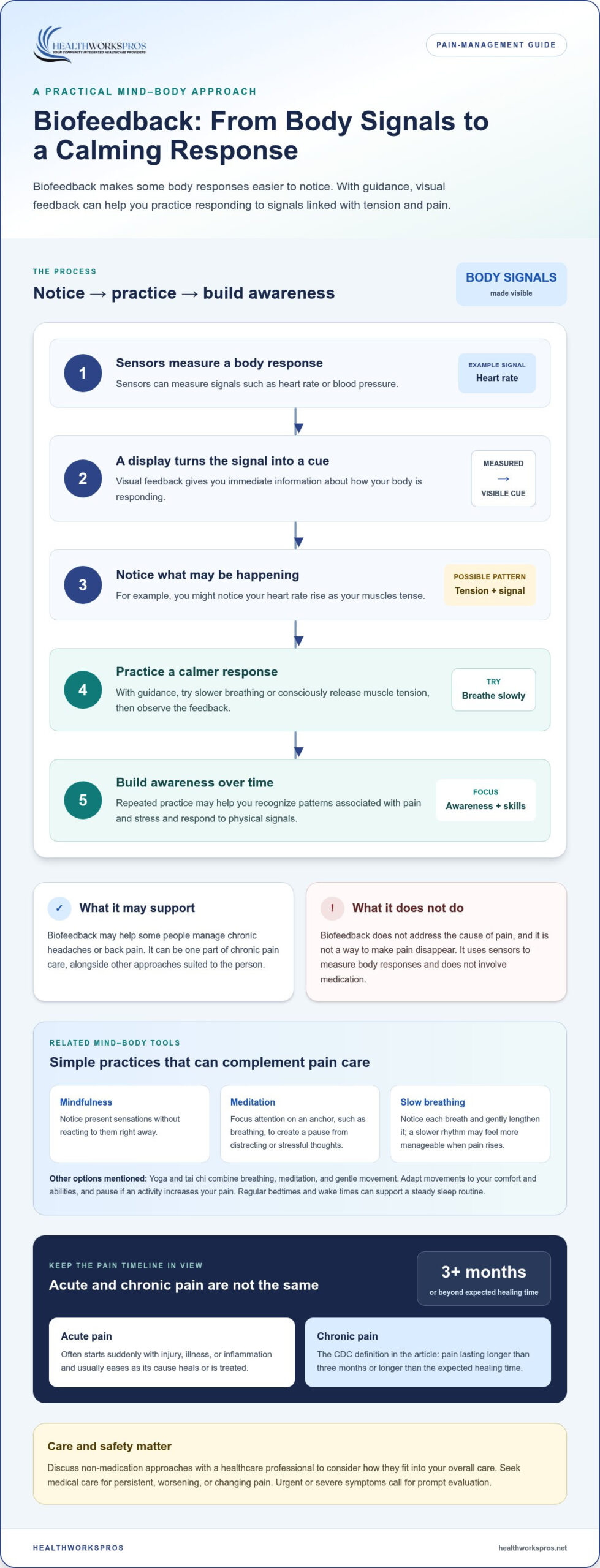
Biofeedback makes body signals easier to notice. Sensors measure responses such as heart rate or blood pressure and display them as visual cues. A trained professional can help you observe how those signals change as you relax. This feedback may help you practice influencing your body’s response to pain.
For example, you might notice your heart rate rise as your muscles tense. With guidance, you can try slower breathing or consciously release that tension. The display gives you immediate information about your body’s response. Over time, this can help you recognize patterns associated with pain and stress.
Biofeedback may help some people manage chronic headaches or back pain, but it doesn’t address the cause of pain. Instead, it can build awareness and skills for responding to physical signals. That makes it one possible part of managing chronic pain without medication, alongside other care suited to your needs.
What are the risks of chiropractic care, acupuncture, massage, and other complementary treatments? Risks vary by treatment, technique, and personal health history. These approaches may have side effects, so discuss your health conditions and current treatments with a healthcare professional before starting. Biofeedback uses sensors to measure body responses and does not involve medication.
Pain can also affect daily routines and broader health needs. A care plan may address more than pain alone, including metabolic health and weight management. Biofeedback is most useful when its signals connect to practical changes, such as noticing tension during a difficult task and practicing a calming response.
Biofeedback turns measured physiological activity into visual cues that can help someone try to change the body’s response to pain. These cues make body activity easier to observe and use as feedback. In this way, biofeedback connects physical signals with the effort to influence how the body responds.
Meditation, mindfulness, and breathing
At home, self-management can include meditation, slow breathing, and a steady sleep routine. For example, use a breathing pause before bed or during a tense moment.
Meditation for Chronic Pain
Meditation focuses attention on an anchor, such as breathing. The National Center for Complementary and Integrative Health notes that meditation can help minimize distracting or stressful thoughts by directing attention. During a pain flare, you might focus on each breath rather than follow every worried thought. This creates a practical pause before returning to a task, such as preparing a meal or getting ready for bed.
Mindfulness and Breathing Practices
Mindfulness means noticing present sensations without reacting to them right away. Slow, deep breathing may help you feel more relaxed and in control when pain rises. Notice the air moving in and out, then gently lengthen each breath. Shallow, rapid breathing during intense pain can contribute to dizziness, anxiety, or panic, so a slower rhythm may feel more manageable. Treat relaxation as a skill to revisit, not a demand to make pain disappear.
At home, choose a regular moment, such as after waking or before sleep, to practice for a few breaths. Notice tension in your shoulders or jaw, then soften those areas as you exhale. Regular bedtimes and wake times can support a steady sleep routine, which matters because poor sleep can worsen pain. If pain persistently disrupts sleep, discuss it with a healthcare professional.
Yoga and tai chi combine breathing, meditation, and gentle movement. Their focus on stretching and strengthening can help connect breath with body awareness. Adapt movements to your comfort and abilities, and pause if an activity increases your pain.
Acute and chronic pain
Acute pain often starts suddenly with injury, illness, or inflammation and usually eases as its cause heals or is treated. According to the Centers for Disease Control and Prevention, chronic pain lasts longer than three months or beyond the expected healing time.
Physical Therapy and Exercise
Physical therapy uses guided movement to help manage pain, condition muscles, and restore strength. A physical therapist can adapt exercises to your symptoms, strength, and mobility. Gentle walking, swimming, or cycling may help with some chronic conditions. Movement can stretch stiff muscles, ligaments, and joints. Start at a comfortable level and build gradually. Increased activity can cause temporary discomfort without necessarily causing harm.
Cognitive Behavioral Therapy
Cognitive behavioral therapy (CBT) is counseling that builds coping skills and addresses thoughts and emotions connected with pain. You may learn to notice distressing thought patterns and choose responses that support daily activities. Pain, stress, and sleep can affect one another. Costs for multidisciplinary treatment depend on the services and visit schedule; insurance coverage varies by plan and treatment.
Sleep, Diet, and Stress
Treatment can be tailored to the cause and symptoms of your pain, as well as your mobility, sleep, and personal goals. Seek medical care for persistent, worsening, or changing pain. Urgent or severe symptoms call for prompt evaluation.
Acute pain can become chronic, and pain can linger for weeks or even months, affecting quality of life. Non-drug treatments may allow some people who need pain medicine to take a lower dose. Occupational therapists can help you manage daily activities without aggravating pain.
HealthWorksPros: Primary Health Care
HealthWorksPros offers Primary Health Care throughout Northern New Jersey for people seeking guidance about persistent pain and care options. A primary care visit can help you discuss how pain affects daily activities, what approaches you’ve tried, and what questions you want addressed. This can support an informed conversation about non-medication strategies and whether acupuncture for chronic pain management or individual counseling may fit your needs.
Acupuncture may help manage certain pain conditions, according to the National Center for Complementary and Integrative Health. Counseling can also support coping with the emotional strain that may accompany ongoing pain. Your symptoms, health history, and personal goals all matter when considering next steps.
For support with chronic pain, contact HealthWorksPros or visit healthworkspros.net.
Choose a Next Step That Fits Your Life
Living with ongoing pain can make plans feel uncertain. A useful next step is to identify one daily activity you want to make easier and bring that goal to a conversation with a healthcare professional. This shifts the focus from pain alone to the parts of life you want support with, such as sleep, movement, or time with others.
Managing chronic pain without medication can involve choices that reflect your health, priorities, and how pain affects your routine. You deserve to discuss those options without pressure and understand how they may fit into your care.
Small, thoughtful steps can help you take a more active role in your care. Your experience matters, and support is available as you consider what comes next.
Frequently Asked Questions
What non-medication treatments help manage chronic pain?
Options depend on the condition, personal goals, and how pain affects daily life. To make a care discussion more useful, briefly note when pain appears, what you were doing, and which activities became difficult. Bring those notes and a list of current treatments to your appointment. These details can help shape a plan around your priorities.
Can mindfulness, meditation, or relaxation techniques reduce chronic pain?
These approaches may help some people cope with pain, though experiences vary. Notice whether a practice changes how pain affects your concentration or daily tasks, rather than judging it only by pain intensity. If focusing inward feels uncomfortable, stop and discuss another approach with a healthcare professional. Share what you noticed to guide future care conversations.

Article by
HealthWorksPros Clinical Editorial Team
This article was reviewed by the HealthWorksPros clinical and healthcare communications team. HealthWorksPros (HWP) is an integrated healthcare organization providing evidence-based primary care, behavioral health, psychiatry, counseling, occupational medicine, telehealth, and substance use treatment to individuals, families, employers, and communities throughout Northern New Jersey. Our content is created to educate and inform and is reviewed for medical accuracy using current clinical standards and trusted healthcare resources. While our articles provide general health information, they are not a substitute for personalized medical advice, diagnosis, or treatment. If you have questions about your health or need medical care, schedule an appointment with one of our healthcare providers.
Disclaimer
The information provided on this website is for general educational and informational purposes only and is not intended as medical advice, diagnosis, or treatment. Content is reviewed for accuracy at the time of publication but should not be considered a substitute for professional medical evaluation or personalized healthcare recommendations.
Always seek the advice of your physician or another qualified healthcare provider regarding any medical condition or before starting, stopping, or changing any treatment. Never disregard professional medical advice or delay seeking care because of information you have read on this website.
If you believe you are experiencing a medical emergency, call 911 or go to the nearest emergency department immediately.
Use of this website does not establish a physician-patient relationship with HealthWorksPros (HWP) or any of its providers. Appointment requests or communications submitted through this website do not guarantee the establishment of a provider-patient relationship until you have been evaluated and accepted for care in accordance with applicable laws and professional standards.