

Potential relief is only part of the decision: medical cannabis for neuropathy in NJ may ease pain for some people, but it is not a cure. New Jersey has eligibility requirements for its Medicinal Cannabis Program, so people with chronic pain may want to check whether they qualify. The decision therefore involves more than symptom relief: possible benefits, side effects, and state rules all matter.
Burning, tingling, or electric-like pain can make it understandable to consider another option, especially when existing treatment has not brought enough relief. Small trials suggest inhaled cannabis and some oral formulations may reduce neuropathy symptoms, though results vary from person to person. This article covers the evidence, potential side effects and interactions, and how New Jersey’s eligibility, possession, and use rules affect the decision. It can help you consider whether medical cannabis fits into a broader care plan.
Key Takeaways
- Learn what current evidence suggests about cannabis and neuropathy symptoms, and why it should not be viewed as a cure.
- Understand how New Jersey’s qualifying-condition rules affect eligibility for medicinal cannabis.
- Recognize potential side effects and medication interactions to discuss as part of a safety-focused care plan.
- Review state rules for medicinal cannabis orders, patient cards, and possession before making decisions about use.
Can Medical Marijuana Treat My Neuropathy?
Small trials suggest cannabis may ease some neuropathy symptoms, but it is not a cure. In New Jersey, eligibility depends on the diagnosis causing the pain.
Neuropathy as a Qualifying Condition
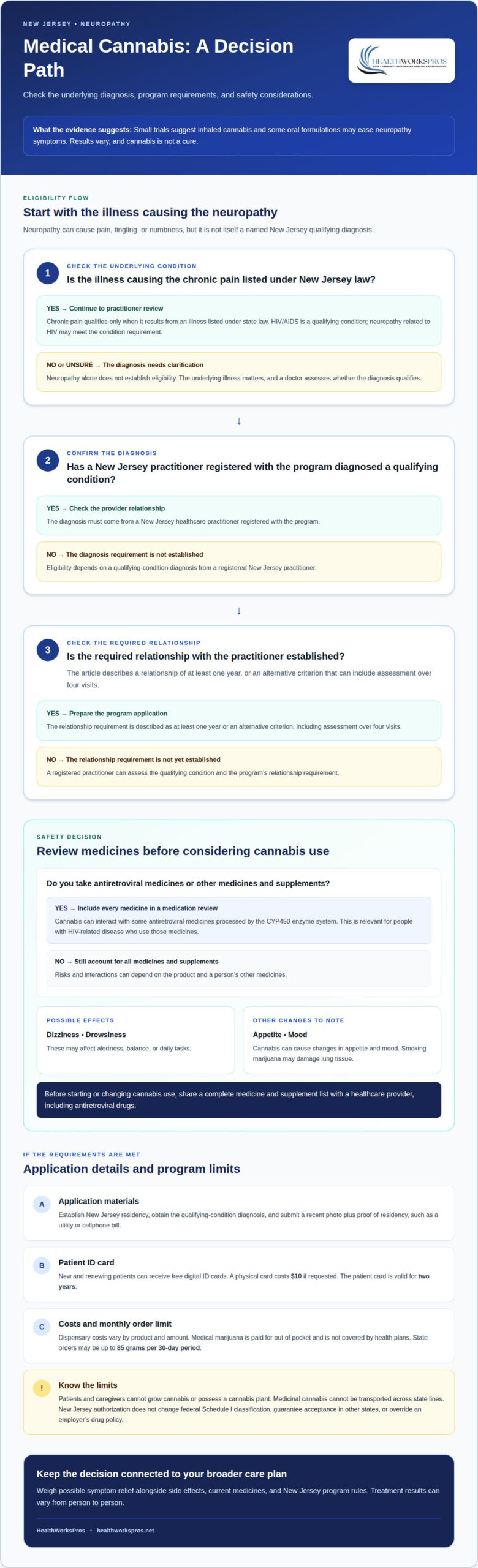
Neuropathy is nerve damage that can cause pain, tingling, or numbness, but it is not itself a named qualifying diagnosis in New Jersey. The underlying illness matters: chronic pain qualifies only when it results from an illness listed under state law. HIV/AIDS is a qualifying condition, so neuropathy related to HIV may meet the condition requirement. A doctor assesses whether the diagnosis qualifies.
Comparing Neuropathy Treatments
Comparing treatments means weighing the evidence for cannabis against established options for the cause and symptoms. Small trials suggest inhaled cannabis and some oral formulations may ease neuropathic pain. Some treatment guidelines place cannabinoids as second- or third-line options, while two medications are FDA-approved for diabetic neuropathy pain. For people considering medical cannabis for neuropathy in NJ, the comparison includes possible symptom relief, side effects, current medicines, and eligibility.
New and renewing patients can receive free digital ID cards. According to the New Jersey Cannabis Regulatory Commission, a physical ID card costs $10 if requested.
To apply, establish New Jersey residency and obtain a qualifying-condition diagnosis from a New Jersey practitioner registered with the program. The required provider relationship can be established for at least one year or through an alternative criterion, including assessment over four visits. Submit a recent photo and proof of residency, such as a utility or cellphone bill.
Dispensary costs vary by product and amount. Medical marijuana is paid for out of pocket and is not covered by health plans.
What are the major risks of taking medical marijuana?
Cannabis can cause dizziness, drowsiness, appetite changes, and mood changes. These effects matter for people managing neuropathy because they may add to existing challenges with balance, daily tasks, or emotional well-being.
Risks, side effects, and interactions depend partly on the product and a person’s other medicines. Tell a healthcare provider about all medicines, especially antiretroviral treatment, before using cannabis.
Cannabis Side Effects
Side effects are unwanted changes that may happen during cannabis use and can affect comfort and daily activities. Dizziness or drowsiness may make tasks requiring alertness or steady movement harder. Appetite and mood can also change. If you have chronic pain, note when an effect occurs and how it affects your routine, then share those details during a medical discussion.
Impairment, Risks, and Drug Interactions
Impairment means cannabis effects interfere with clear thinking, coordination, or alertness. Drowsiness and dizziness can create practical concerns during activities that depend on steady movement or attention. Smoking marijuana may damage lung tissue, so the method of use matters when considering risks. Cannabis can also interact with some antiretroviral medicines processed by the CYP450 enzyme system. This is relevant for patients with HIV-related disease who use those medicines.
Before starting or changing cannabis use, make a complete list of medicines and supplements, including antiretroviral drugs. Discuss the list with a healthcare provider, along with any history of mood changes or concerns about anxiety. For people considering medical cannabis for chronic pain in New Jersey, tracking side effects and interactions can inform ongoing care. A careful medication review is especially useful when treatment already includes several medicines.
Medicinal cannabis safety and legal rules
New Jersey’s program has state rules, while federal cannabis classification remains different. Understanding both helps patients know what a state medical card does and does not permit.
New Jersey residents need a qualifying condition diagnosed by a New Jersey healthcare practitioner registered with the program. Chronic pain qualifies only when it results from an illness listed under the Act. The New Jersey Cannabis Regulatory Commission says a provider may establish a bona fide relationship through at least four qualifying-condition assessment visits.
Orders have a state limit: according to the New Jersey Cannabis Regulatory Commission, patients may receive up to 85 grams of cannabis per 30-day period. A patient card is valid for two years. Patients and caregivers cannot grow cannabis or possess a cannabis plant, and medicinal cannabis cannot be transported across state lines.
Federal law still classifies marijuana as a Schedule I controlled substance. New Jersey authorization does not change federal classification, guarantee acceptance in other states, or override an employer’s drug policy. Patients should check whether their out-of-state medical cannabis card can be used in New Jersey. Visitors from other states should check New Jersey’s registration requirements before relying on the program during their stay.
Rules also cover younger patients: people under 18 may participate with a parent or guardian registered as caregiver. Some cannabinoid medicines have specific FDA approvals, including synthetic THC pills for nausea in cancer patients undergoing chemotherapy. That approval is distinct from New Jersey program authorization and does not make all cannabis products FDA-approved.
Discuss medical cannabis eligibility
HealthWorksPros: Primary Health Care
HealthWorksPros provides Primary Health Care for people who want to discuss neuropathy symptoms, current medicines, and care options in one conversation. If chronic pain affects daily activities or treatment causes side effects, a healthcare visit can help clarify the underlying condition and inform a care plan. HealthWorksPros also offers a Medical Cannabis Program and Acupuncture for Chronic Pain Management, which may be relevant topics to discuss when exploring pain care. Individual Counseling can support patients coping with the emotional strain of ongoing symptoms. These services complement a thoughtful review of personal health needs; they do not replace urgent care for severe or sudden symptoms. Contact HealthWorksPros to discuss your care needs.
Take the Next Step With a Care Plan That Fits
Before deciding whether medical cannabis for neuropathy in NJ belongs in your care plan, identify what you hope to improve, such as pain, sleep, or daily function. Bring your medication list and questions about how treatment options fit your health needs to a healthcare visit. Your symptoms, medical history, and workplace responsibilities can all shape the conversation.
HealthWorksPros offers Primary Health Care and Acupuncture for Chronic Pain Management. Its SHIELD™ Workforce Health & Occupational Medicine program may be relevant when health concerns affect work. A thoughtful next step is to discuss your goals and concerns with a healthcare professional. You deserve care conversations that respect your experience and help you consider your options.
Frequently Asked Questions
Want to Know More About Medical Marijuana in NJ?
HealthWorksPros offers a Medical Cannabis Program for people seeking information about cannabis care. Before a conversation, note your main treatment goal, such as easing nerve pain or improving daily function, and bring questions about New Jersey eligibility. You can also ask how cannabis might fit alongside other approaches, including care for the condition causing neuropathy.
What are the laws and regulations surrounding marijuana?
New Jersey has a state medicinal cannabis program, while federal law classifies marijuana separately. Visitors should know that an out-of-state medical cannabis card alone is not accepted in New Jersey. A visiting patient may register for a nonrenewable New Jersey program card valid for six months during their stay. State authorization applies specifically to the program and does not make cannabis legal everywhere.
What is neuropathy?
Neuropathy means damage or dysfunction affecting nerves, which may lead to pain, tingling, numbness, or other changes in sensation. Causes can include poorly managed diabetes, cancer, autoimmune diseases, shingles, or chemical exposure. For example, tingling in the feet may be linked to an underlying illness, so describing symptoms and their effects on daily activities can help guide a clinical evaluation.
Can medical cannabis help neuropathy pain, and what does research show?
Some small trials suggest cannabis may ease neuropathic pain, but the findings don’t establish a standard treatment or dose. One placebo-controlled inhaled-cannabis trial found a significant difference in spontaneous pain scores between doses, with P < .001. That result describes a study comparison, not a dosing recommendation. A treatment decision also needs to consider safety and the cause of nerve pain.
Does New Jersey qualify neuropathy as a condition for medical cannabis?
Neuropathy itself is not a named qualifying condition in New Jersey. Eligibility depends on whether chronic pain results from an illness listed under the state program, with the qualifying diagnosis made by a registered New Jersey practitioner. In practice, the diagnosis behind the nerve symptoms matters more than the word “neuropathy” alone. The reason for the nerve symptoms may be relevant when considering medical cannabis.

Article by
HealthWorksPros Clinical Editorial Team
This article was reviewed by the HealthWorksPros clinical and healthcare communications team. HealthWorksPros (HWP) is an integrated healthcare organization providing evidence-based primary care, behavioral health, psychiatry, counseling, occupational medicine, telehealth, and substance use treatment to individuals, families, employers, and communities throughout Northern New Jersey. Our content is created to educate and inform and is reviewed for medical accuracy using current clinical standards and trusted healthcare resources. While our articles provide general health information, they are not a substitute for personalized medical advice, diagnosis, or treatment. If you have questions about your health or need medical care, schedule an appointment with one of our healthcare providers.
Disclaimer
The information provided on this website is for general educational and informational purposes only and is not intended as medical advice, diagnosis, or treatment. Content is reviewed for accuracy at the time of publication but should not be considered a substitute for professional medical evaluation or personalized healthcare recommendations.
Always seek the advice of your physician or another qualified healthcare provider regarding any medical condition or before starting, stopping, or changing any treatment. Never disregard professional medical advice or delay seeking care because of information you have read on this website.
If you believe you are experiencing a medical emergency, call 911 or go to the nearest emergency department immediately.
Use of this website does not establish a physician-patient relationship with HealthWorksPros (HWP) or any of its providers. Appointment requests or communications submitted through this website do not guarantee the establishment of a provider-patient relationship until you have been evaluated and accepted for care in accordance with applicable laws and professional standards.