


A safer home can support independence, not take it away. Preventing falls in elderly parents at home starts with practical changes: improve lighting in dim areas, install grab bars where bathroom support is needed, and make sure stairs have secure handrails.
It’s natural to want your parent to move through familiar spaces with confidence. Small home adjustments can make daily routines easier while respecting their choices and privacy. This guide explains how to improve lighting in bedrooms, hallways, and stairways; where grab bars and handrails can help; and which other common hazards to look for. You’ll also learn how to plan changes together, keeping safety and independence part of the same conversation.
Key Takeaways
- Add night-lights along routes your parent uses after dark, and make stair lighting easy to control from both ends.
- Look at the home from your parent’s perspective to spot obstacles and changes that could make daily movement harder.
- Place grab bars near the toilet and tub or shower, and make sure stair handrails offer steady support.
- Talk with a primary care provider about falls or near-falls and how health factors may affect balance and safety.
1. Improving lighting
Preventing falls in elderly parents at home starts with checking the routes they use after dark. Place night-lights in bedrooms, bathrooms, and hallways to make floor-level hazards easier to see. Other useful changes include clearing pathways, improving lighting, installing bathroom grab bars, and securing stair handrails.
Make the bedroom-to-bathroom route easy to see and navigate. Night-lights can illuminate the way to the bathroom, kitchen, or another frequently used room. Keep cords, shoes, laundry, and small furniture out of walkways. Place a charged phone within easy reach of the bed so your parent can call for help in an emergency, and keep a flashlight nearby for power outages.
Check that stair lights work from both the top and bottom. Bright, even lighting makes step edges and changes in floor level easier to see. Keep stairs clear and make sure handrails run alongside the steps. In the bathroom, light the route to the shower and toilet, and install grab bars to support transfers.
Walk through the home together at your parent’s usual pace. Look for dim corners, glare, shadows, and hard-to-reach switches. Ask which lights they use at night, then add or reposition lighting as needed. If dizziness or drowsiness affects walking, discuss medications with a healthcare provider. These practical steps can reduce fall risks while respecting familiar routines.
2. Fall prevention and maintaining independence
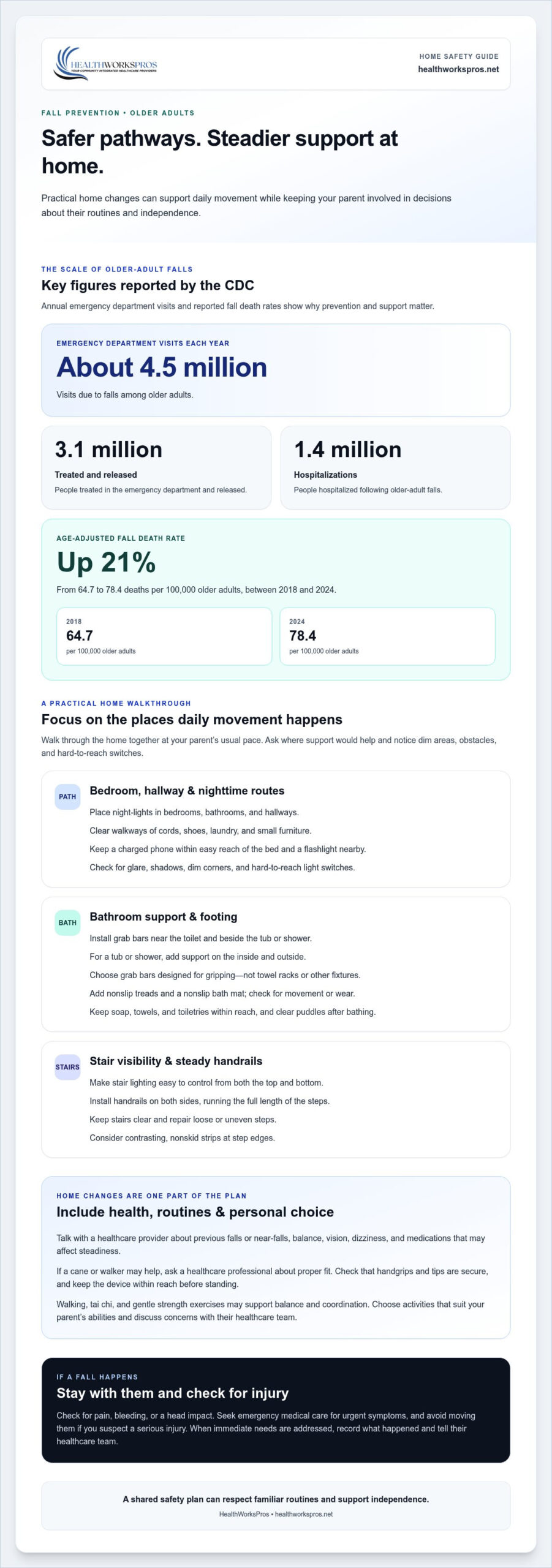
Falls can affect independence, so include your parent in decisions about daily activities and support. The Centers for Disease Control and Prevention reports about 4.5 million emergency department visits each year due to older-adult falls, resulting in 3.1 million people treated and released and 1.4 million hospitalizations. The CDC also reports that the age-adjusted fall death rate increased by 21%, from 64.7 per 100,000 older adults in 2018 to 78.4 per 100,000 older adults in 2024.
Ask your parent’s healthcare team to review any previous falls or near-falls, along with balance, vision, and medications. Explain when unsteadiness occurs and which activities feel difficult. Walking, tai chi, and gentle strength exercises may support balance and coordination. Choose activities that suit your parent’s abilities, and discuss concerns with their healthcare team.
If your parent falls, stay with them and check for pain, bleeding, or a head impact. Seek emergency medical care for urgent symptoms, and avoid moving them if you suspect a serious injury. Once immediate needs are addressed, record what happened and tell their healthcare team. Plan practical support around the activities your parent wants to continue, and revisit the plan when routines or needs change.
In the United States, call 800-677-1116, according to the Administration for Community Living, to find a local Area Agency on Aging and ask about fall-prevention programs. To discuss health concerns that may affect mobility, request an appointment.
3. Installing bathroom grab bars and stair handrails
Install grab bars near the toilet and beside the tub or shower. For a tub or shower, add support on both the inside and outside. These locations can help your parent steady themselves while standing or transferring. Choose bars designed for gripping, not towel racks or other fixtures that may not support body weight. Secure installation matters: a loose bar can create a hazard rather than provide reliable support.
Add nonslip treads to the tub or shower floor, and place a nonslip bath mat outside. A bath seat can reduce the need to stand while washing. Keep soap, towels, and toiletries within reach so your parent doesn’t lean or twist across a wet surface. Check mats and treads for movement or wear, and clear any puddles after bathing.
Install handrails on both sides of the stairs, running the full length of the steps. Encourage your parent to hold a rail while going up or down. Keep stairs clear, repair loose or uneven steps, and consider contrasting, nonskid strips at the edges. These changes can make steps easier to see and provide steady support while walking.
Canes and walkers may help with balance, but proper fit matters. A healthcare professional can help determine whether a device suits your parent’s needs. Check that handgrips and tips are secure, and keep the device within reach before they stand. Walk through the bathroom and stairway together and ask where support would help. Install grab bars and handrails to match those daily movements, preserve familiar routines, and reduce tripping hazards.
Request a primary care appointment
HealthWorksPros: Primary Health Care
HealthWorksPros offers Primary Health Care for families addressing health concerns that may affect a parent’s steadiness. A primary care visit is an opportunity to discuss falls, near-falls, dizziness, and medications that may cause drowsiness or affect balance. Bring a list of current medications and examples of when unsteadiness occurs, such as getting up at night or climbing stairs. This information helps focus the conversation on your parent’s daily needs and health history.
Consider making an appointment if your parent has fallen, feels less steady, or has new concerns about moving safely at home. Primary care is a practical next step alongside the home safety changes described above.
Contact HealthWorksPros or visit healthworkspros.net to learn more about Primary Health Care.
Keep the Next Step Collaborative
Let your parent help decide which changes feel useful and comfortable. A shared plan makes preventing falls in elderly parents at home an ongoing conversation, not a one-time checklist. Revisit it when routines or health needs change, and note new concerns to discuss with a healthcare professional. HealthWorksPros offers Primary Health Care, SHIELD™ Workforce Health & Occupational Medicine, and Acupuncture for Chronic Pain Management. These services address broader health needs while you and your parent shape a home routine that respects their choices.
Thoughtful steps can help your parent feel heard and involved in decisions about their home and wellbeing.
Frequently Asked Questions
How can my home better support me as I age?
Arrange your home around daily tasks and the support you prefer. Notice where you pause, reach, or feel unsteady, such as while dressing or carrying laundry. Keep frequently used items within easy reach, and choose furniture that helps you sit and stand comfortably. Discuss changes with family or your care team so your home supports your routines and choices.
Who can help me age in place?
Your healthcare team, an occupational or physical therapist, and trusted family members can help plan support for aging at home. A therapist can consider how daily activities and the home environment affect movement. HealthWorksPros’ Elder Home Care Help Program supports older adults with daily living and health needs. Include your parent in decisions about the help they want.
What are the most common causes of falls among older adults at home?
Changes in balance, vision, strength, or reaction time can make routine movements harder and increase fall risk. Foot pain, poorly fitting shoes, rushing to answer the door, or standing quickly may also affect steadiness. Note whether a fall happens during a particular task, such as turning or carrying items, and share that pattern with a healthcare professional.
How can I assess an elderly parent’s home for fall hazards room by room?
Walk through each room with your parent and observe how they use it. In the kitchen, check whether they stretch or climb to reach dishes. In the living room, notice whether they twist around furniture. At doorways, look for raised thresholds or changes in floor level. Ask which daily tasks feel difficult, then prioritize the areas your parent identifies.
Which medications and health conditions increase fall risk in older adults?
Medicines that cause dizziness or drowsiness, as well as interactions between prescriptions, over-the-counter medicines, or supplements, can affect steadiness. Health changes affecting vision, strength, balance, or reaction time may also contribute. Ask a healthcare professional to review the full medication list, especially after a medicine or dose change. To discuss fall concerns, contact HealthWorksPros about Primary Health Care.

Article by
HealthWorksPros Clinical Editorial Team
This article was reviewed by the HealthWorksPros clinical and healthcare communications team. HealthWorksPros (HWP) is an integrated healthcare organization providing evidence-based primary care, behavioral health, psychiatry, counseling, occupational medicine, telehealth, and substance use treatment to individuals, families, employers, and communities throughout Northern New Jersey. Our content is created to educate and inform and is reviewed for medical accuracy using current clinical standards and trusted healthcare resources. While our articles provide general health information, they are not a substitute for personalized medical advice, diagnosis, or treatment. If you have questions about your health or need medical care, schedule an appointment with one of our healthcare providers.
Disclaimer
The information provided on this website is for general educational and informational purposes only and is not intended as medical advice, diagnosis, or treatment. Content is reviewed for accuracy at the time of publication but should not be considered a substitute for professional medical evaluation or personalized healthcare recommendations.
Always seek the advice of your physician or another qualified healthcare provider regarding any medical condition or before starting, stopping, or changing any treatment. Never disregard professional medical advice or delay seeking care because of information you have read on this website.
If you believe you are experiencing a medical emergency, call 911 or go to the nearest emergency department immediately.
Use of this website does not establish a physician-patient relationship with HealthWorksPros (HWP) or any of its providers. Appointment requests or communications submitted through this website do not guarantee the establishment of a provider-patient relationship until you have been evaluated and accepted for care in accordance with applicable laws and professional standards.