


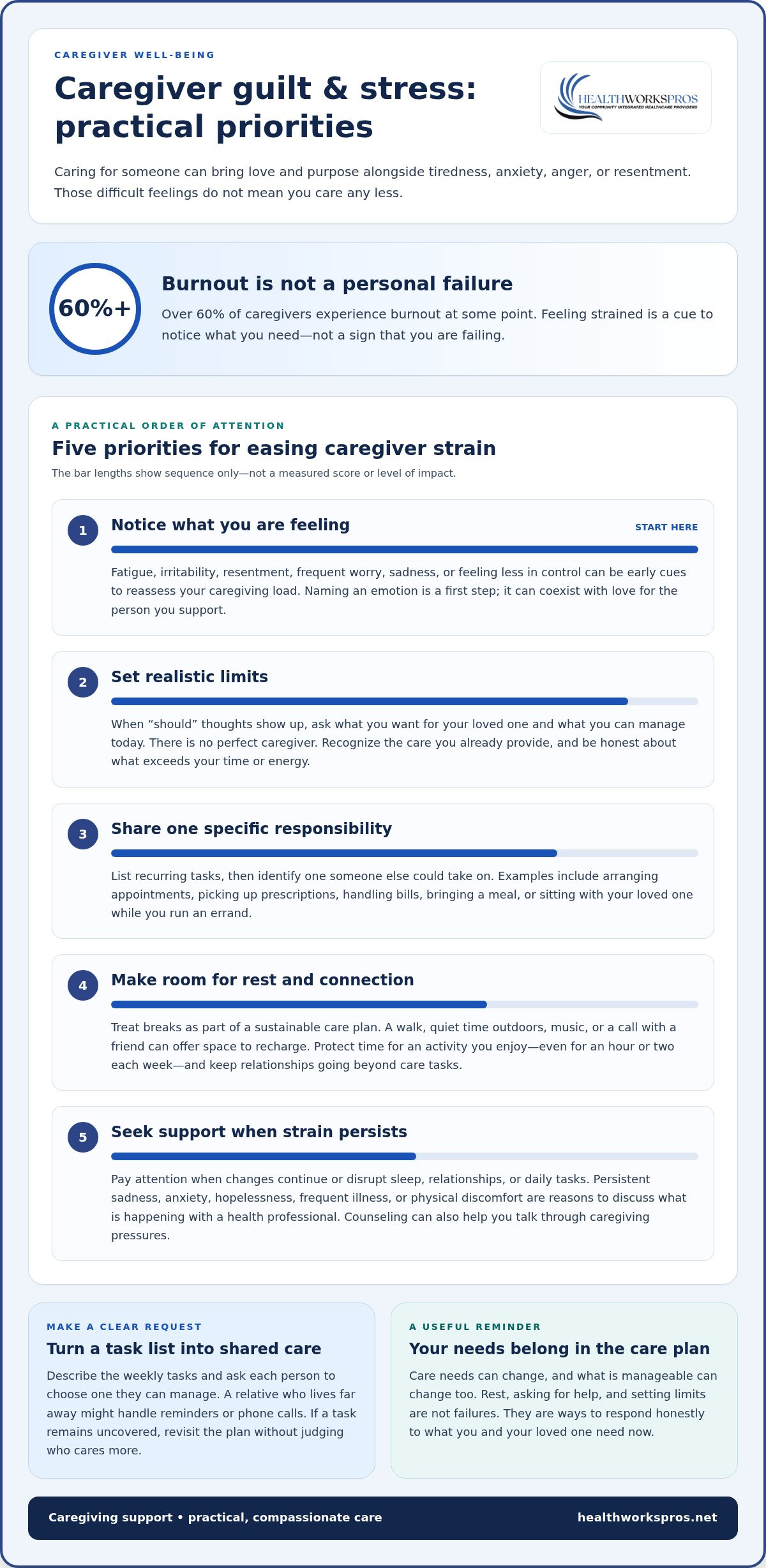
Over 60% of caregivers experience burnout at some point, so feeling strained doesn’t mean you’re failing. Avoiding caregiver guilt and stress starts with acknowledging difficult feelings, treating yourself with compassion, and setting realistic limits. Feeling anxious, resentful, or tired of caregiving can coexist with love for the person you support.
You may feel you should be able to do more, or alone with responsibilities that keep growing. Those feelings deserve attention, not judgment. This article offers practical ways to manage guilt, ask family and friends for help, and make room for rest. It also explains how to recognize when stress, loneliness, or depression may call for professional support, so you can care for your own well-being as well as your loved one’s.
Key Takeaways
- Notice early changes such as rising irritability or feeling less in control, and use them as cues to reassess your caregiving load.
- Replace perfection-driven expectations with realistic limits and acknowledge the care you’re already providing.
- Make a list of recurring caregiving tasks and identify which ones family or friends could take on.
- If sadness, anxiety, or loneliness persists, consider talking with a mental health professional about support.
1. What Is Caregiver Guilt, and How Should You Manage It?
Caregiver guilt can surface when you feel bad about needing time away, losing patience, or not doing enough. Feeling anxious, angry, or resentful doesn’t mean you love your family member any less. You can value time together and still miss your usual routine. Naming the emotion is a first step toward managing it.
Ways to avoid caregiver guilt and stress include setting realistic expectations, taking breaks, and reviewing responsibilities before accepting more tasks. Notice “should” thoughts, then ask what you want for your loved one and what you can manage today. Forgive yourself for limits and mistakes. There is no perfect caregiver. Recognize your strengths, such as keeping appointments organized, while being honest about tasks that exceed your time or energy.
To ease guilt about taking breaks or asking for help, treat rest as part of a sustainable care plan, not a failure. Choose one task someone else could handle, such as scheduling an appointment, and make a specific request. Even a short break can give you space to recharge and return with more patience.
Burnout can build gradually: fatigue, irritability, and resentment may appear before severe exhaustion. Over 60% of caregivers experience burnout at some point. Signs of stress can include frequent worry or sadness, physical problems, and losing interest in activities you enjoy. Feeling unable to control daily life can also be a warning sign.
Pay attention if changes persist or begin disrupting sleep, relationships, or daily tasks. Anxiety, depression, or hopelessness deserve attention, especially alongside constant fatigue or frequent illness. Note the changes you notice and consider discussing them with a health professional. Recognizing them early can help you identify support or limits that may make caregiving more manageable.
2. Seeking support from family, friends, groups, or professionals
Support works best when requests are clear and tied to specific responsibilities. List the caregiving tasks in a typical week, such as arranging appointments, picking up prescriptions, or handling bills. Then ask family members to take on tasks that fit their schedules. A relative who lives far away might manage appointment reminders or make phone calls. Friends may be able to bring a meal or sit with your loved one while you run an errand.
Family dynamics can complicate shared care, especially when old disagreements or uneven contributions resurface. Keep the conversation focused on what your loved one needs now. Describe the weekly tasks and ask each person to choose one they can manage. If someone declines, clarify what remains uncovered and revisit the plan without turning the discussion into a judgment about who cares more.
Guilt can linger when relationships are strained or a relative feels you should do more. Acknowledge the hurt without assuming you can repair everything through caregiving. You might say, “I want us to discuss the appointment schedule calmly,” then agree on one practical next step. If past conflict continues to disrupt care decisions, a counselor or care professional can help you talk through the situation.
Stay connected with friends and family beyond caregiving conversations. A regular phone call, shared meal, or short visit can preserve a relationship beyond care tasks. Support groups also offer space to speak honestly with people who understand caregiving pressures. If asking for help feels difficult, start with one trusted person and one manageable request. Specific responsibilities make it easier for others to respond and can help you feel less alone.
Caregiving-related stress, loneliness, and depression
Caregiving can bring affection and purpose alongside anger, grief, loneliness, or guilt. These mixed feelings may grow as care needs increase, personal routines shrink, or family responsibilities feel uneven. Some caregivers feel trapped as circumstances change. Feeling tired of caregiving doesn’t mean you’ve stopped caring about your loved one.
Guilt and stress often arise when a loved one’s care needs exceed what you can provide physically or emotionally. A promise made earlier may no longer fit changed circumstances. Instead of judging yourself by that promise, consider what is manageable now. Resentment or anger can also signal that responsibilities need review, not that you’re uncaring.
For low-cost self-care, choose small activities you can repeat without adding pressure. Take a walk, sit quietly outdoors, listen to music, or call a friend. Protect time for an activity you enjoy, even for an hour or two each week. A brief pause can give you room to recharge and reconnect with interests beyond caregiving.
Loneliness may deepen when conversations focus only on care tasks or you feel unable to speak honestly. Make a regular plan with someone you trust, such as a weekly phone call or shared meal. If sadness, anxiety, or hopelessness continues, or daily life feels increasingly difficult, consider speaking with a mental health professional. Support can help you understand your feelings and identify next steps.
Request support for caregiver stress
HealthWorksPros: Primary Health Care
HealthWorksPros offers Primary Health Care for caregivers who want to discuss how ongoing stress may affect their health. A primary care visit is an opportunity to raise concerns such as persistent fatigue, changes in sleep, or frequent physical discomfort. Sharing these changes can help your healthcare provider understand what you’re experiencing and discuss appropriate next steps.
If sadness, anxiety, or isolation is weighing on you, Individual Counseling offers a place to talk through difficult feelings and caregiving pressures. You don’t need to wait until you feel unable to cope before seeking support. Consider reaching out when emotional strain begins affecting daily routines, relationships, or your ability to care for yourself.
Contact HealthWorksPros to learn more about Primary Health Care or Individual Counseling.
Take a Supportive Next Step for Yourself
Caregiving needs can change, and your next step can change with them. Choose an action that protects your well-being, such as setting a limit, reconnecting with someone you trust, or discussing ongoing strain with a health professional. Avoiding caregiver guilt and stress doesn’t require solving everything at once. It can begin with recognizing that your health matters, too.
HealthWorksPros offers Primary Health Care and Individual Counseling for people who want to discuss physical or emotional concerns. Acupuncture for Chronic Pain Management may also be relevant if physical pain affects daily life. For workplace health needs, HealthWorksPros offers SHIELD™ Workforce Health & Occupational Medicine.
You deserve care and understanding as you support someone you love. One thoughtful step can help you move forward with greater steadiness.
Frequently Asked Questions
What Is Caregiver Guilt, and How Should You Manage It?
Caregiver guilt is distress that can arise when your actions or limits seem at odds with your expectations. Name the specific concern, then ask whether there’s a step you can take to address it. If you missed a call, for example, you might arrange a time to reconnect instead of judging yourself as a caregiver.
How can family members share caregiving responsibilities fairly?
Fair sharing means making a plan that accounts for each person’s availability and abilities. One family member might attend appointments, while another handles phone calls or paperwork. Write down who is responsible for each task and how updates will be shared. Review the arrangement when care needs or schedules change, so assumptions don’t leave important duties uncovered.
Where can caregivers find respite care and support groups in the United States?
In Paterson, New Jersey, caregivers can ask their loved one’s healthcare team or local aging and disability resource offices about respite options and support groups. Respite may include a trusted person stepping in, an adult day program, or in-home help. Groups may meet online or in person, making it easier to find a format that fits your schedule.
When should a caregiver seek professional mental health support?
Consider professional mental health support if distress persists, worsens, or disrupts sleep, work, relationships, or everyday decisions. A counselor can help you explore what feels difficult and identify coping approaches. If you may harm yourself or someone else, or cannot stay safe, seek emergency medical care now: call 911 or go to the nearest emergency department.
What boundaries can caregivers set while still providing compassionate care?
Set limits by explaining what you can reliably do and what you cannot take on. For example, you could agree to attend a regular care meeting but not answer non-urgent calls during work. Clarify how urgent concerns should be communicated and who else can help. Clear boundaries support dependable care while protecting time for your own responsibilities.

Article by
HealthWorksPros Clinical Editorial Team
This article was reviewed by the HealthWorksPros clinical and healthcare communications team. HealthWorksPros (HWP) is an integrated healthcare organization providing evidence-based primary care, behavioral health, psychiatry, counseling, occupational medicine, telehealth, and substance use treatment to individuals, families, employers, and communities throughout Northern New Jersey. Our content is created to educate and inform and is reviewed for medical accuracy using current clinical standards and trusted healthcare resources. While our articles provide general health information, they are not a substitute for personalized medical advice, diagnosis, or treatment. If you have questions about your health or need medical care, schedule an appointment with one of our healthcare providers.
Disclaimer
The information provided on this website is for general educational and informational purposes only and is not intended as medical advice, diagnosis, or treatment. Content is reviewed for accuracy at the time of publication but should not be considered a substitute for professional medical evaluation or personalized healthcare recommendations.
Always seek the advice of your physician or another qualified healthcare provider regarding any medical condition or before starting, stopping, or changing any treatment. Never disregard professional medical advice or delay seeking care because of information you have read on this website.
If you believe you are experiencing a medical emergency, call 911 or go to the nearest emergency department immediately.
Use of this website does not establish a physician-patient relationship with HealthWorksPros (HWP) or any of its providers. Appointment requests or communications submitted through this website do not guarantee the establishment of a provider-patient relationship until you have been evaluated and accepted for care in accordance with applicable laws and professional standards.