


Nearly one in eight U.S. adults has used a GLP-1 medication, yet finding clear, trustworthy medical facts can still feel overwhelming. If you feel exhausted by conflicting social media claims, anxious about potential digestive side effects, or frustrated with automated prescribing apps that offer zero genuine follow-up care, you aren’t alone. Sustainable metabolic health isn’t about chasing rapid shortcuts; it’s about understanding your body’s unique biology.
You deserve clear, compassionate answers from providers who listen. In this clinical guide, you’ll discover how GLP-1 treatments actually work, who safely qualifies under evidence-based medical standards, and why continuous clinician supervision is essential for long-term health. We’ll also preview the vital nutrition and behavioral habits that support your journey, connecting you to dependable, patient-centered metabolic care right here in New Jersey.
Key Takeaways
- Learn how natural gut hormones and GLP-1 receptor agonists communicate with your brain to help regulate blood sugar and quiet persistent food noise.
- Discover the medical benchmarks clinicians use to evaluate treatment candidacy, along with proactive strategies to ease digestive adjustments.
- Understand why lasting metabolic improvement requires pairing medical therapies with balanced nutrition and sustainable daily habits.
- Explore how compassionate behavioral health support and licensed clinician oversight in New Jersey nurture your total well-being.
What Is GLP-1 and How Does It Regulate Metabolic Health?
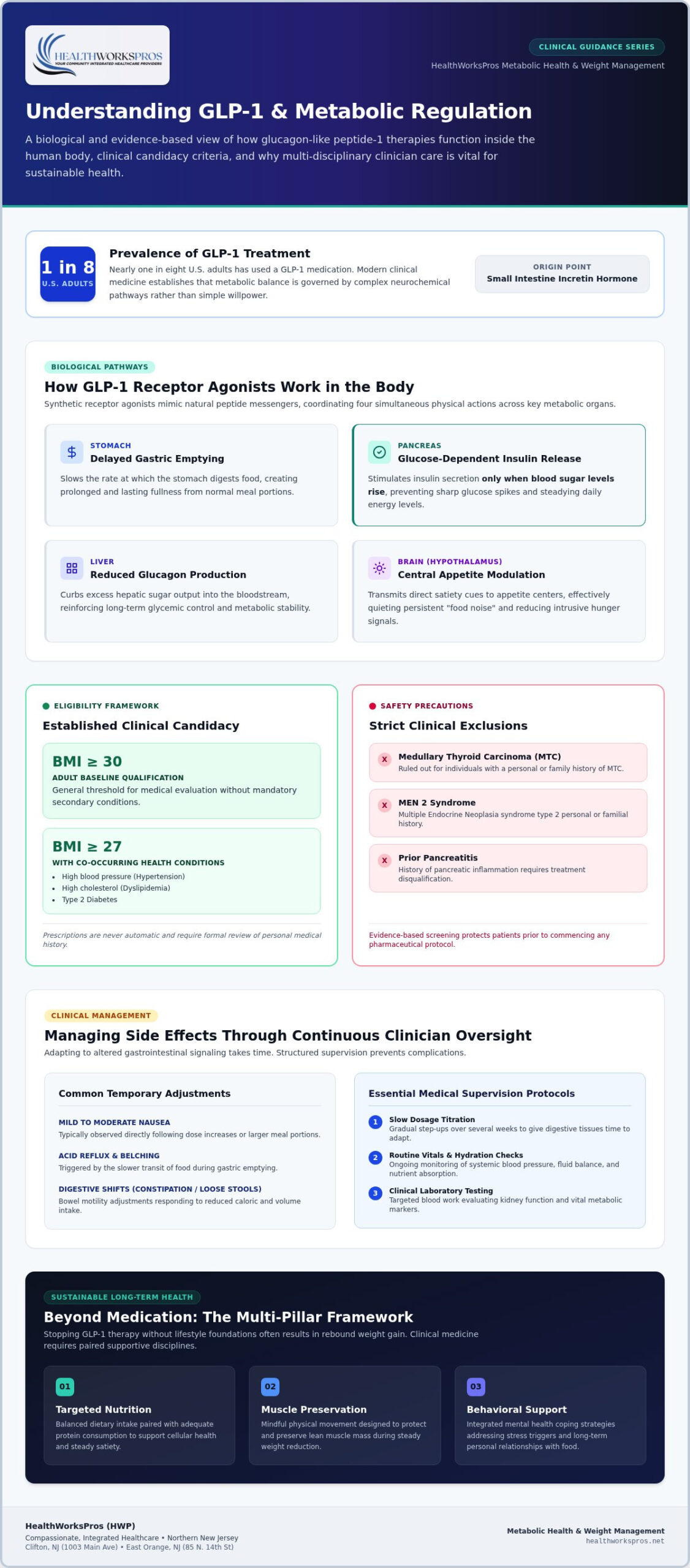
Glucagon-like peptide-1, commonly known as GLP-1, is an incretin hormone produced naturally in your small intestine. Whenever you eat, your digestive tract releases this messenger to alert your pancreas, liver, and brain. For years, conventional thinking treated weight as a simple test of willpower. Modern clinical medicine shows that metabolic balance is largely governed by complex neurochemical pathways. Recognizing this biological reality removes unnecessary self-blame, helping patients view their health through a clear, evidence-based lens.
Prescription therapies known as GLP-1 receptor agonists are synthetic medications designed to mimic this naturally occurring peptide. By binding to the exact same cell receptors, they reinforce vital metabolic cues between the gut and the brain. Through the comprehensive HWP Metabolic Health and Weight Management program, our clinical team helps patients evaluate these complex signaling systems as part of an integrated, whole-person approach to well-being.
How GLP-1 Receptor Agonists Work in the Body
These treatments coordinate several targeted physical processes at once:
- Delayed Gastric Emptying: The stomach slows the rate at which it digests food, creating lasting fullness from normal portions.
- Glucose-Dependent Insulin Release: The pancreas releases insulin only when blood sugar rises, preventing sharp glucose spikes and steadying daily energy levels.
- Reduced Glucagon Production: The liver curbs excess sugar production, supporting long-term metabolic stability.
- Central Appetite Modulation: Receptors in the brain’s hypothalamus receive direct signals of satisfaction, reducing intrusive hunger thoughts.
Evaluating Candidacy, Safety, and Common GLP-1 Side Effects
Determining whether medication makes sense begins with a careful medical review. Established clinical criteria evaluate GLP-1 therapy for adults with a body mass index (BMI) of 30 or higher, or a BMI of 27 or higher alongside a weight-related condition such as high blood pressure, high cholesterol, or Type 2 diabetes. However, safe practice rules out treatment for individuals with a personal or family history of medullary thyroid carcinoma, Multiple Endocrine Neoplasia syndrome type 2, or prior pancreatitis. Prescriptions are never automatic; they require a thorough clinical evaluation to confirm safety.
Research confirms that GLP-1 acts as a multifaceted hormone with broad pharmacological potential, but adapting to it takes time. When digestive signaling changes, temporary symptoms can occur. These often include:
- Mild to Moderate Nausea: Usually occurs right after dose increases or larger meals.
- Acid Reflux and Belching: Caused by slower gastric emptying.
- Digestive Shifts: Constipation or loose stools as the bowel adjusts to lower food intake.
Why Ongoing Medical Supervision and Monitoring Are Essential
Patient safety depends on slow, deliberate dosage titration over several weeks, giving your digestive tract ample time to adapt. Consistent clinician oversight ensures routine checks on blood pressure, hydration levels, and nutrient balance. When clinically appropriate, our team orders laboratory tests to verify kidney function and metabolic markers. If you are exploring options, you can complete our online clinical intake form to help our medical providers review your unique history.
Beyond Medication: Comprehensive Metabolic Care in New Jersey
Clinical evidence demonstrates that pharmaceutical support alone cannot ensure permanent results. While GLP-1 medications effectively manage blood sugar (glucose) levels and quiet persistent hunger cues, stopping treatment without lifestyle foundations often leads to rebound weight gain. Real, lasting wellness requires combining clinical therapy with tailored nutrition, adequate protein consumption, and mindful movement to preserve lean muscle mass. Understanding how your body manages energy through key measures such as blood sugar, blood pressure, and blood fats is equally important, and our guide to practical steps to understand and support your metabolic health can help you build that foundation.
Emotional well-being is equally essential. Weight management touches deeply personal habits, stress triggers, and relationship dynamics with food. Integrated behavioral health support provides the emotional coping strategies needed to navigate daily life challenges, ensuring mental wellness grows alongside your physical progress. Patients seeking additional psychiatric and counseling services alongside their metabolic care can explore outpatient mental health clinic services Passaic residents can access through HealthWorksPros’s whole-person integrated care framework.
Navigating Insurance Verification and Personalized Support with HealthWorksPros
Eligible New Jersey residents can access virtual-first, compassionate medical care through our HWP Metabolic Health and Weight Management program. Our licensed providers tailor every step of your health journey, avoiding one-size-fits-all algorithms in favor of authentic personal partnerships. Because every patient’s biology is different, prescriptions are never guaranteed and require a full clinical evaluation, with medications dispensed separately by licensed pharmacies.
Complex insurance rules shouldn’t stand between you and quality care. Our dedicated team actively assists with insurance-benefit verification and prior authorization paperwork to help streamline your access. You can take the next step today by filling out our secure online intake form to partner with a trusted medical team committed to your lifelong health.
Take the Next Step Toward Lasting Metabolic Health
Achieving sustainable wellness is never about rapid fixes or navigating complex treatments on your own. When you understand GLP-1 as a biological regulator rather than an isolated cure, meaningful change begins. Lasting vitality thrives when experienced medical oversight, balanced nutrition, and compassionate behavioral therapy unite under one integrated care team. For eligible New Jersey residents, our clinician-led program provides personalized guidance at every stage, including dedicated help with insurance benefits and prior-authorization paperwork.
Schedule your clinical metabolic evaluation with HealthWorksPros
You don’t have to walk this path in isolation or settle for impersonal algorithms. With trusted local healthcare partners and whole-person support by your side, building lasting health is fully within your reach.
Frequently Asked Questions
Can anyone receive a GLP-1 prescription upon request?
No, prescriptions are never guaranteed upon request. A licensed healthcare provider must evaluate your complete health history, current medications, and baseline medical criteria to confirm whether GLP-1 therapy is safe and clinically appropriate for you. In our New Jersey program, patient safety and personalized clinical judgment always guide prescribing decisions.
What happens if I stop taking GLP-1 medications?
Do I need bloodwork before starting a metabolic weight management plan?
Bloodwork is required only if your evaluating clinician determines it is medically necessary. Your provider reviews your comprehensive health history and any recent lab results you already have during your consultation. If updated diagnostic tests are needed to assess kidney function or glucose levels, your clinician will order appropriate testing.
Does commercial health insurance cover GLP-1 therapy in New Jersey?
Coverage depends entirely on your specific insurance provider and individual plan benefits. Many commercial insurers require extensive prior-authorization paperwork or specific clinical thresholds before approving GLP-1 medications, and some exclude weight-loss coverage entirely. Our team actively helps eligible New Jersey residents verify their benefits and navigate paperwork, though approval cannot be guaranteed.

Article by
HealthWorksPros Clinical Editorial Team
This article was reviewed by the HealthWorksPros clinical and healthcare communications team. HealthWorksPros (HWP) is an integrated healthcare organization providing evidence-based primary care, behavioral health, psychiatry, counseling, occupational medicine, telehealth, and substance use treatment to individuals, families, employers, and communities throughout Northern New Jersey. Our content is created to educate and inform and is reviewed for medical accuracy using current clinical standards and trusted healthcare resources. While our articles provide general health information, they are not a substitute for personalized medical advice, diagnosis, or treatment. If you have questions about your health or need medical care, schedule an appointment with one of our healthcare providers.
Disclaimer
The information provided on this website is for general educational and informational purposes only and is not intended as medical advice, diagnosis, or treatment. Content is reviewed for accuracy at the time of publication but should not be considered a substitute for professional medical evaluation or personalized healthcare recommendations.
Always seek the advice of your physician or another qualified healthcare provider regarding any medical condition or before starting, stopping, or changing any treatment. Never disregard professional medical advice or delay seeking care because of information you have read on this website.
If you believe you are experiencing a medical emergency, call 911 or go to the nearest emergency department immediately.
Use of this website does not establish a physician-patient relationship with HealthWorksPros (HWP) or any of its providers. Appointment requests or communications submitted through this website do not guarantee the establishment of a provider-patient relationship until you have been evaluated and accepted for care in accordance with applicable laws and professional standards.