


Acupuncture may help ease sciatica pain, including pain linked to a herniated disc, but it doesn’t reposition the disc or remove its cause. For people considering acupuncture for sciatica in Paterson, a randomized trial involving 216 people with herniated-disc sciatica used 10 sessions over four weeks, according to JAMA Internal Medicine.
Sciatic pain can make sitting, standing, or walking difficult, so it’s natural to want a clear idea of what treatment may involve. This article explains sciatica, how acupuncture may help, and why the number of sessions depends on factors such as the cause and duration of symptoms. It also looks at research on herniated-disc sciatica to help you understand where acupuncture may fit into care.
Key Takeaways
- Recognize common sciatica symptoms and understand why identifying their cause matters.
- Learn which factors shape the number and pace of acupuncture sessions.
- See how acupuncture may fit into care for sciatica linked to a herniated disc.
- Explore when acupuncture for chronic pain management may be a helpful part of your care plan.
How many acupuncture sessions are needed for sciatica?
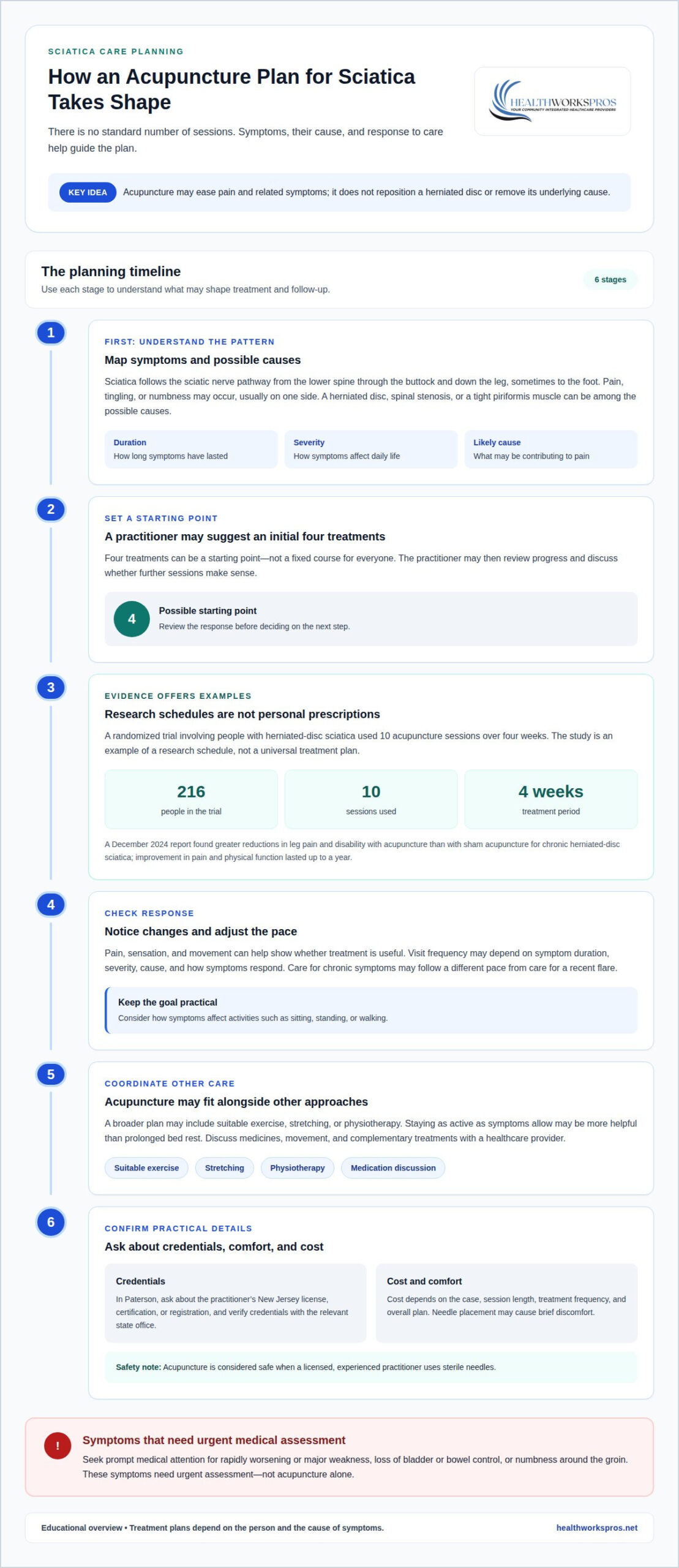
There’s no standard number of acupuncture sessions for sciatica. A treatment plan depends on how long symptoms have lasted, their severity, the cause, and how they respond. A practitioner may suggest starting with four treatments, then reviewing progress and deciding whether further sessions make sense.
Research offers examples, not a schedule for everyone. A randomized clinical trial included 216 people with sciatica caused by a herniated disk, according to JAMA Internal Medicine. Participants received 10 sessions over four weeks. A separate comparison reported symptom improvement or disappearance among 73% of patients taking NSAIDs. One cited study found that a ten-day acupuncture course relieved symptoms more effectively than certain NSAIDs. These findings don’t establish one best approach for every patient.
Acupuncture may be combined with other care, including suitable exercise, stretching, and physiotherapy. Staying as active as symptoms allow may be more helpful than prolonged bed rest. Discuss medicines, movement, and complementary treatments with a healthcare provider so your plan accounts for the cause of pain and your other health needs.
For spinal stenosis or spondylolisthesis, acupuncture may help manage pain, but it won’t correct the underlying vertebral abnormality. An assessment should consider symptom patterns, possible causes, and treatment goals before selecting acupuncture points or setting visit frequency. Care for chronic symptoms may follow a different pace than treatment for a recent flare.
Acupuncture costs depend on the case and are provided after a quote request. Factors include session length, treatment frequency, and the overall plan. In Paterson, ask about the practitioner’s New Jersey license, certification, or registration, and verify their credentials with the relevant state office.
Needle placement may cause brief discomfort. Acupuncture is considered safe when a licensed, experienced practitioner uses sterile needles.
Does acupuncture help it?
Acupuncture may ease sciatica symptoms, but it doesn’t address every underlying cause. Understanding how pain follows the sciatic nerve can clarify what treatment may target. For people in Paterson considering acupuncture for sciatica, symptoms and their likely cause are useful starting points.
Nerve Pathways and Sciatica Symptoms
The sciatic nerve forms from nerve roots in the lower spine, then travels through the buttock and down the leg. Sciatica describes pain along this pathway, sometimes extending to the foot. Tingling or numbness may also occur. Symptoms usually affect one side, though conditions such as spinal stenosis may cause discomfort on both sides. The pattern can help a healthcare provider assess possible causes, including a herniated disk or a tight piriformis muscle. This deep buttock muscle lies close to the nerve, so tightness can contribute to similar symptoms.
Acupuncture as a Natural Approach
Acupuncture uses thin needles at selected points to address pain and related symptoms. For sciatica, treatment aims to reduce nerve irritation and discomfort, not move a disk or correct another structural cause. Acupuncture may affect endorphins and the availability of serotonin and norepinephrine, chemicals involved in pain regulation. This may help explain pain relief, although responses vary. In Paterson, acupuncture may be one part of a broader pain-care plan.
Some people consider acupuncture alongside medicine or other care, especially when leg pain affects daily activities. A healthcare provider can assess your symptoms and whether acupuncture fits your broader plan. Staying active as symptoms allow may support recovery, while prolonged rest can contribute to muscle weakness. Changes in pain, sensation, and movement can help show whether treatment is useful.
Acupuncture for herniated-disc sciatica
A herniated disc can press on a spinal nerve root and send pain, tingling, or numbness into the leg. Acupuncture focuses on managing these symptoms, not repairing the disc. That distinction matters: pain relief may support daily movement, while the structural cause still needs appropriate medical attention.
A randomized clinical trial published in December 2024 in JAMA Internal Medicine found greater reductions in leg pain and disability with acupuncture than with sham acupuncture for chronic sciatica caused by a herniated disc. The improvement in pain and physical function lasted up to a year. These results support acupuncture as an option to discuss when usual care has not provided enough relief, rather than as a replacement for assessing the spinal condition.
For this type of sciatica, the described approach places acupuncture points near the affected area around the fourth and/or fifth lumbar vertebrae. A practitioner may also apply a mild electrical current through the needles. Treatment aims to ease pain and related muscle tension; it does not move a herniated disc back into place or remove pressure on the nerve. Changes in symptoms, including leg pain or numbness, remain important when assessing how care is working.
Seek prompt medical attention for rapidly worsening or major weakness, loss of bladder or bowel control, or numbness around the groin. These symptoms need urgent assessment, not acupuncture alone.
HealthWorksPros: Acupuncture for Chronic Pain Management
HealthWorksPros offers Acupuncture for Chronic Pain Management for people exploring additional support for ongoing pain, including sciatica symptoms. It may be worth discussing if leg or back discomfort continues to affect daily activities, or if you want to understand how acupuncture could fit alongside other care. Acupuncture does not correct a herniated disc or replace urgent medical attention for serious symptoms. Primary Health Care is also available for broader health needs, including a discussion of persistent pain and your overall care. Your symptoms, the suspected cause, and your treatment goals can help guide that conversation. Contact HealthWorksPros with questions about acupuncture or care options.
Take a Thoughtful Next Step for Your Comfort
If you’re considering acupuncture for sciatica in Paterson, use your next care conversation to focus on what you want to do more comfortably, such as sitting through a meal or walking around your neighborhood. Mention your symptoms, current medicines, and any treatments you’ve tried. This context can help your healthcare team discuss how acupuncture might fit your care and which changes would be meaningful to track.
Because responses to acupuncture vary, it may help to agree on how progress will be reviewed before treatment begins. You can also discuss how your care connects with your broader health needs. A clear, shared plan can make the next step feel more manageable.
You deserve care that takes your concerns seriously and supports your goals, one considered step at a time.
Frequently Asked Questions
What is sciatica?
Sciatica is pain or other nerve symptoms that travel along the sciatic nerve, often from the lower back or buttock into the leg. The discomfort can feel sharp, burning, or electric, and some people notice tingling or numbness. A herniated disc is one possible cause. A healthcare professional can assess the pattern and help identify what may be irritating the nerve.
What Is Acupuncture and Why Is It Used for Pain?
Acupuncture uses thin needles placed at selected points on the body. For pain, the aim is symptom relief rather than correcting a structural problem such as a herniated disc. Some people consider it as part of a broader care plan. Tell your healthcare provider about your symptoms and medicines before adding acupuncture to your care.
Can I avoid back surgery with acupuncture?
Acupuncture cannot guarantee that you’ll avoid back surgery, and it doesn’t repair a herniated disc. It may be considered for pain management, while decisions about surgery depend on the condition and symptoms. Significant or rapidly worsening weakness, loss of bladder or bowel control, or numbness around the groin needs prompt medical attention, not acupuncture alone.
Does insurance cover acupuncture for sciatica?
Coverage depends on the terms of your insurance plan, so there isn’t one answer for every patient. Review your plan’s acupuncture benefits and any referral or prior-approval requirements. Before starting treatment, ask how visits are billed and what costs you would owe. These steps can clarify your expected expenses without assuming sciatica care is covered.
How is it treated?
Sciatica care depends on its cause, symptoms, and effect on daily activities. Options can include staying active as tolerated, exercise, stretching, and hot or cold therapy. Acupuncture may be considered for pain management alongside other care. Seek prompt medical attention for new or worsening weakness, bladder or bowel changes, or numbness around the groin, as these symptoms need urgent assessment.

Article by
HealthWorksPros Clinical Editorial Team
This article was reviewed by the HealthWorksPros clinical and healthcare communications team. HealthWorksPros (HWP) is an integrated healthcare organization providing evidence-based primary care, behavioral health, psychiatry, counseling, occupational medicine, telehealth, and substance use treatment to individuals, families, employers, and communities throughout Northern New Jersey. Our content is created to educate and inform and is reviewed for medical accuracy using current clinical standards and trusted healthcare resources. While our articles provide general health information, they are not a substitute for personalized medical advice, diagnosis, or treatment. If you have questions about your health or need medical care, schedule an appointment with one of our healthcare providers.
Disclaimer
The information provided on this website is for general educational and informational purposes only and is not intended as medical advice, diagnosis, or treatment. Content is reviewed for accuracy at the time of publication but should not be considered a substitute for professional medical evaluation or personalized healthcare recommendations.
Always seek the advice of your physician or another qualified healthcare provider regarding any medical condition or before starting, stopping, or changing any treatment. Never disregard professional medical advice or delay seeking care because of information you have read on this website.
If you believe you are experiencing a medical emergency, call 911 or go to the nearest emergency department immediately.
Use of this website does not establish a physician-patient relationship with HealthWorksPros (HWP) or any of its providers. Appointment requests or communications submitted through this website do not guarantee the establishment of a provider-patient relationship until you have been evaluated and accepted for care in accordance with applicable laws and professional standards.