
What if the most important safety tool in your New Jersey facility isn’t a hard hat or a pair of goggles, but a simple blood test? Many business owners in Essex and Passaic County feel overwhelmed when they try to decode which chemicals or noise levels trigger mandatory testing. It’s stressful to worry about potential fines or, worse, an employee falling ill because a health risk went unnoticed. We understand that you want to be a dedicated ally for your workers while keeping your company’s reputation strong. This is why staying current with OSHA medical surveillance NJ protocols is more than just a legal hurdle; it’s a vital commitment to your team’s long-term wellness.
You’ll learn exactly how to protect your team and stay compliant with state and federal requirements using our practical 2026 checklist. This guide walks you through the latest standards for both private and public sector workers, including critical reporting deadlines like the March 2nd ITA submission. We’ll also explain how a local occupational medicine partner can simplify these complex screenings, so you can focus on growing your business with the peace of mind that comes from expert, compassionate care.
Key Takeaways
- Understand how OSHA medical surveillance NJ acts as an early warning system to catch work-related illnesses before they become permanent.
- Identify the specific workplace triggers, such as silica exposure or respirator use, that make mandatory health screenings a legal requirement.
- Follow a practical 2026 checklist to establish baseline examinations and choose the right licensed healthcare professional for your team.
- Learn the “30-year rule” for recordkeeping to ensure your business stays compliant with strict privacy and documentation laws.
- Discover how the SHIELD™ program provides an integrated approach to workforce health and safety throughout Essex and Passaic County.
What is OSHA Medical Surveillance and Why Does it Matter in NJ?
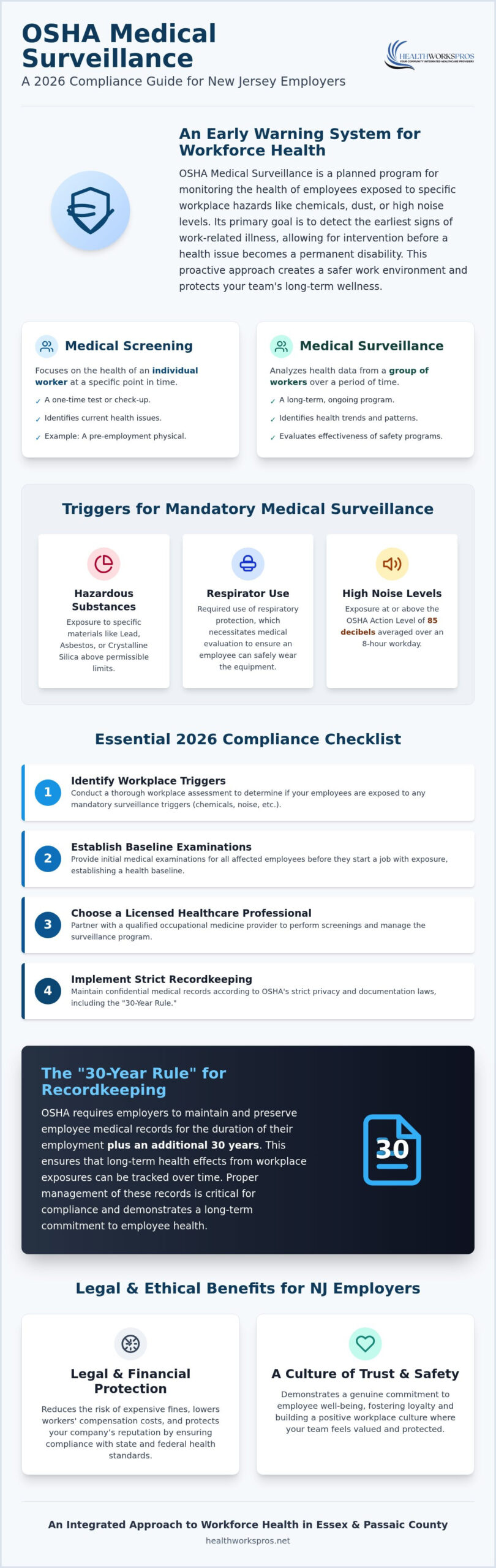
At its heart, OSHA medical surveillance NJ is a planned program to watch over the health of workers who deal with specific hazards. It isn’t just about a single doctor’s visit. Instead, it’s a long-term strategy to monitor employees who might be exposed to things like lead, asbestos, or high noise levels. The main purpose is to catch the very first signs of a work-related illness. By finding these signs early, you can often prevent a small health change from becoming a permanent disability. It’s about being proactive rather than waiting for someone to get sick.
New Jersey is a bit different from other states because of how our health rules are managed. While federal OSHA handles private companies, the New Jersey Department of Health steps in to investigate health hazards for public employees. This means local employers need to be aware of both sets of standards. Understanding What is Workplace Health Surveillance? helps you see the bigger picture of how these rules keep everyone safe. When you follow these guidelines, you create a “feedback loop.” This means the medical data you collect helps you see if your current safety masks, fans, or work habits are actually working. If the tests show a problem, you can fix the workplace before anyone else is affected.
Medical Screening vs. Medical Surveillance
Many people use these terms as if they mean the same thing, but they have different roles. Medical screening is a one-time test for a specific person. It checks if that individual has a health issue right now. Surveillance is different because it looks at the health trends of your whole team over a long period. Screening tells you how one worker is doing, while surveillance tells you how your safety program is performing. These two tools work together to identify workplace dangers and prevent chronic diseases from taking hold in your company.
The Legal and Ethical Benefits for NJ Employers
Staying compliant with these rules is a smart business move for any facility in East Orange or Passaic. On a legal level, it helps you meet the high bars set by both federal and state health standards. This reduces your risk of facing expensive fines or long legal battles. It also helps keep workers’ compensation costs lower because you’re preventing major injuries and illnesses before they start. When you address health risks early, you protect your company’s bottom line and its reputation in the community.
There is also a deep ethical benefit to this work. When you provide high-quality occupational health services, you show your team that you’re a dedicated ally. Your workers in Essex or Passaic County will feel more valued when they see you investing in their long-term wellness. This builds a culture of trust and safety that makes people want to stay with your company. It turns a regulatory requirement into a way to show you truly care about the people who help your business grow every day.
Triggers for Mandatory Medical Surveillance Programs
Knowing when to start a health monitoring program can be confusing for many business owners. The law is very specific about what “starts the clock” for compliance. If your team works with hazardous materials like lead, asbestos, or crystalline silica, you are likely required to provide regular medical checkups. These substances can cause long-term damage that isn’t always visible right away. Another major trigger involves the use of respiratory protection. If your staff must wear gas masks or heavy-duty respirators to stay safe, you must ensure they are physically fit enough to wear that gear. This is a core part of OSHA’s Medical Surveillance Requirements. Staying current with OSHA medical surveillance NJ standards ensures your team stays healthy and your business stays open.
Noise is another common factor that many employers overlook. If your workplace noise levels hit 85 decibels averaged over an 8-hour day, you’ve reached the “Action Level.” At this point, hearing tests and monitoring become mandatory. This is a frequent issue in manufacturing and construction hubs throughout Northern NJ. It’s not just about following a rule; it’s about protecting the hearing and well-being of the people who make your business successful. By identifying these triggers early, you can act as a dedicated ally for your workforce.
Common Hazards in Northern New Jersey Industries
How to Conduct a Workplace Hazard Assessment
To find out where you stand, start by reviewing your Safety Data Sheets (SDS). Every chemical on your site has one. It will tell you if the substance requires medical monitoring. Next, you should measure your air quality and noise levels to see if they cross the legal limits. Mapping these needs out is easier when you work with a trusted provider who understands the local regulatory landscape. You might consider looking into Occupational Medicine services to help you navigate these assessments with confidence. By taking these steps, you show your team that their health is your top priority. This proactive approach helps you build a safer, more reliable workplace for everyone.
The Essential OSHA Medical Surveillance Checklist for 2026
Setting up a health monitoring program doesn’t have to be a source of stress. Once you’ve identified the hazards in your workplace, the next step is to follow a clear path toward compliance. For 2026, staying on top of OSHA medical surveillance NJ requirements, including the March 2nd Injury Tracking Application deadline, means being organized and proactive. Your primary goal is to create a safety net that catches health issues before they grow. This process starts with finding a qualified Physician or Other Licensed Health Care Professional (PLHCP) who understands your specific industry needs.
Every employee in a high-risk role needs a baseline examination. This test happens before they start their duties or when a new hazard is introduced. It gives you a starting point to compare against future tests. From there, you must schedule periodic follow-up exams. These aren’t just one-time events. They’re regular checkups that track changes in an employee’s health over several years. To protect your workers and remain compliant, remember that all exams must be:
- Conducted at no cost to the employee.
- Scheduled during regular working hours.
- Performed by a licensed professional who knows the relevant standards.
Step 1: Selecting a Local Occupational Health Partner
Choosing the right provider is a critical decision. You should look for clinics in Clifton or East Orange that offer integrated care. A local partner who understands the occupational safety medical exams required for your industry will save you time and prevent errors. They should be familiar with the Northern NJ regulatory landscape and the specific needs of manufacturing or construction teams. Having a provider nearby makes it easier for your staff to attend appointments without long travel times. For businesses based in Essex County, learning more about employee physical exams in East Orange can help you understand what a comprehensive workforce health program looks like in practice.
Step 2: Preparing for the Medical Exam
For the doctor to do their best work, they need clear information from you. You must provide a detailed description of the employee’s duties and their specific exposure levels. Don’t forget to include details on any personal protective equipment (PPE) they use, like respirators or earplugs. It’s also helpful to give the doctor a copy of the exact OSHA standard you’re following. This ensures the exam is thorough and legally sound while giving the clinician the context they need to provide high-level care.
Step 3: Managing the “Written Medical Opinion”
After the exam, the doctor will provide a Written Medical Opinion. This document is a key part of New Jersey Occupational Health Surveillance. As an employer, you’re only allowed to see if the worker is fit for duty and if there are any limitations on their work. Specific medical diagnoses must remain private. When you receive the results, communicate them clearly and compassionately with your employee. This builds trust and shows you’re a dedicated ally in their health journey.
Managing Records and Privacy Under NJ Law
Protecting your team’s health data is just as important as the medical exams themselves. When it comes to OSHA medical surveillance NJ, you must follow the “30-Year Rule.” This means you need to keep employee medical records for the full duration of their employment plus 30 years after they leave your company. It is a long time, but it’s designed to protect workers if health problems related to old exposures show up later in life. You also need to ensure that every employee can view or copy their own records within 15 days of asking.
Confidentiality is a cornerstone of a trusting relationship between you and your staff. You must keep all medical files in a locked, separate location from general personnel files. Your managers should not have access to private health details. They only need to know if a person is cleared for duty or if they have specific work limits. Because our community in Northern NJ is so diverse, providing results in the language your team understands best is essential. We offer bilingual English and Spanish services to make sure every worker feels heard and respected throughout the process.
HIPAA and Workplace Privacy in New Jersey
It’s vital to know the difference between “employment records” and “protected health information.” While your HR team needs to track attendance or performance, they must handle medical data with extreme care. Training your staff on these privacy rules is a smart way to avoid trouble and build a culture of safety. Record-keeping is the most common area for OSHA citations because small errors in filing or retention can lead to big penalties. Keeping your files organized and private isn’t just about following the law; it’s about being a reliable partner to your employees.
Using Results to Improve Workplace Safety
Medical data is more than just a list of names and dates. When you look at the results of your team as a whole, you might notice patterns that others miss. If several people in one department have similar health changes, it’s a sign that your safety controls need a closer look. You might need to adjust your ventilation, provide better PPE, or change work hours to reduce exposure. Using these insights is a key part of workplace injury prevention services. It allows you to fix the environment before a minor issue becomes a major crisis.
If you need help setting up a secure and compliant record-keeping system for your facility, you can contact our team for expert guidance today.
SHIELD™: Your Partner for Integrated Workforce Health in NJ
Managing a workplace safety program is about more than just checking boxes on a list. It’s about the people who make your business run every day. This is why we created the SHIELD™ Workforce Health & Occupational Medicine program. Our goal is to bridge the gap between strict medical rules and the compassionate care your team deserves. By choosing a partner that understands the local landscape, you can handle your OSHA medical surveillance NJ needs with total confidence. We act as your dedicated ally, ensuring your company stays compliant while your employees stay healthy.
We believe that integrated care is the key to a productive workforce. This means we don’t just look at a single test result; we connect your workplace safety needs with Primary Health Care to support the whole person. Our clinics in East Orange, Clifton, Passaic, and Paterson are designed to be welcoming spaces where your employees feel comfortable. We combine clinical expertise with a warm, supportive approach. This steady pace of care makes it easier for your staff to stay healthy and for your company to stay compliant with both state and federal laws.
Comprehensive Care for Northern NJ Businesses
Whether you run a small local shop or a large industrial plant, we have the tools to help you. We provide specialized support for businesses of all sizes throughout Passaic and Essex County. Our team speaks both English and Spanish to ensure every worker feels heard and respected. If you are just starting out, our guide on occupational health for small business is a great place to begin. We work to build meaningful connections with the diverse communities we serve, making professional medical compliance accessible to everyone.
Getting Started with Your Surveillance Program
Setting up your program is a simple, methodical process. You can start by scheduling a consultation at our East Orange or Clifton offices. We will sit down with you to map out exactly what your facility needs to stay safe. Because we offer integrated healthcare, we can coordinate medical exams with Behavioral Health or Psychiatric services if a worker needs extra support. This total-health approach is what sets us apart as a leader in OSHA medical surveillance NJ services. We are here to guide you through every level of care, from physical screenings to mental health resources.
Ready to take the next step for your team? Contact HealthWorksPros to schedule your OSHA medical surveillance consultation today.
Building a Safer Future for Your Workforce
Staying ahead of the 2026 requirements means more than just avoiding fines; it means you’re creating a workplace where everyone can thrive. You’ve seen how identifying hazards early and keeping precise records for the long term protects both your employees and your company’s future. By following a clear checklist and understanding the triggers for OSHA medical surveillance NJ, you’ve taken the first step toward a higher standard of care. This proactive approach turns a legal duty into a meaningful way to show your team that you truly value their well-being.
Our SHIELD™ Workforce Health & Occupational Medicine program is here to help you manage these complex needs with ease. We serve East Orange, Clifton, Passaic, and Paterson with a dedicated team of bilingual staff who prioritize human-centered care. We believe that your success as an employer is built on the health and trust of your team. Our integrated model ensures that medical screenings are combined with a supportive, professional environment that respects the needs of every worker.
Protect your team and your business with the SHIELD™ program. Schedule your consultation today. We look forward to being your partner in safety and wellness.
Frequently Asked Questions
Who is responsible for paying for OSHA medical surveillance exams in NJ?
Employers are responsible for all costs associated with these mandated medical exams. You must pay for the medical tests, and the exams must happen during the worker’s regular work hours. If the appointment happens outside of their usual shift, you must pay the employee for their time. You are also responsible for any travel costs if the clinic is not located at the job site.
Can an employee refuse to participate in a mandatory OSHA medical exam?
An employee can refuse to participate, but it may prevent them from working in certain high-risk roles. If a worker chooses not to take a required exam, they can’t legally perform duties that trigger that specific medical monitoring. In these cases, you should have the employee sign a formal declination form to document their choice for your safety records. This helps protect your company if questions about compliance arise later.
What happens if a medical exam shows an employee is being overexposed to a hazard?
You must take immediate action to review and improve your workplace safety controls if an exam shows signs of overexposure. This often involves checking your ventilation systems, adjusting work habits, or providing more effective protective gear. In some cases, a physician might recommend “medical removal.” This means the worker is moved to a safer area of the facility until their health levels return to a safe range.
How often do OSHA medical surveillance exams need to be repeated?
The timing for repeat exams depends on the specific chemical or hazard your team works with every day. Most standards require a follow-up checkup every year or every two years to track health changes over time. Your healthcare provider will help you stay on schedule by following the exact OSHA medical surveillance NJ requirements for your specific industry and exposure levels.
Is an exit exam required when an employee leaves the company?
Exit exams are required for certain hazards, such as asbestos or lead, to document the worker’s health at the end of their employment. These final tests are helpful for both the worker and the employer. They provide a clear record that shows whether the workplace safety measures were effective during the person’s time at your company. This documentation is a vital part of your long-term liability protection.
What is the difference between an OSHA physical and a regular primary care checkup?
An OSHA physical is a targeted exam that looks for specific signs of workplace illness, while a primary care checkup focuses on total wellness. A regular doctor’s visit might cover things like diet, exercise, or flu shots. An OSHA exam is much more specialized. It includes tests like hearing checks or lung function screenings to see if workplace hazards are affecting the body. To understand how these specialized exams compare to standard workforce physicals, our guide on employee physical exams in East Orange offers a helpful overview of what a comprehensive workforce health evaluation covers.
Does HealthWorksPros provide bilingual OSHA medical exams in Passaic County?
Yes, we provide fully bilingual services in English and Spanish to support the diverse workforce in our community. Our team serves employers throughout Passaic County and Essex County from our convenient offices in Clifton and East Orange. We believe that every worker deserves to understand their health results clearly, so we prioritize compassionate communication in the language they speak best.
How long must an employer keep OSHA medical surveillance records in New Jersey?
You must keep these medical records for the full duration of a person’s employment plus an additional 30 years. This long-term retention is a core requirement for OSHA medical surveillance NJ compliance. It ensures that health data remains available if a work-related illness develops long after a person has left the company. Keeping these files secure and separate from general personnel files is essential for worker privacy.
Article by
HealthWorksPros Clinical Editorial Team
This article was reviewed by the HealthWorksPros clinical and healthcare communications team. HealthWorksPros (HWP) is an integrated healthcare organization providing evidence-based primary care, behavioral health, psychiatry, counseling, occupational medicine, telehealth, and substance use treatment to individuals, families, employers, and communities throughout Northern New Jersey. Our content is created to educate and inform and is reviewed for medical accuracy using current clinical standards and trusted healthcare resources. While our articles provide general health information, they are not a substitute for personalized medical advice, diagnosis, or treatment. If you have questions about your health or need medical care, schedule an appointment with one of our healthcare providers.
Disclaimer
The information provided on this website is for general educational and informational purposes only and is not intended as medical advice, diagnosis, or treatment. Content is reviewed for accuracy at the time of publication but should not be considered a substitute for professional medical evaluation or personalized healthcare recommendations.
Always seek the advice of your physician or another qualified healthcare provider regarding any medical condition or before starting, stopping, or changing any treatment. Never disregard professional medical advice or delay seeking care because of information you have read on this website.
If you believe you are experiencing a medical emergency, call 911 or go to the nearest emergency department immediately.
Use of this website does not establish a physician-patient relationship with HealthWorksPros (HWP) or any of its providers. Appointment requests or communications submitted through this website do not guarantee the establishment of a provider-patient relationship until you have been evaluated and accepted for care in accordance with applicable laws and professional standards.