You notice your brother hasn’t been himself lately, but you aren’t sure if it’s just work stress or something more serious. You want to help, yet the fear of saying the wrong thing often keeps you silent. It’s completely normal to feel confused when you’re trying to protect someone you care about. You don’t have to carry this worry alone.
This guide will help you identify the specific signs of substance use disorder in a loved one while offering a clear, supportive path forward. We’ll explore how to recognize subtle physical and behavioral changes that might otherwise go unnoticed. You’ll also learn how our integrated care model in East Orange and Clifton provides the combined medical and emotional support your family needs. Finding the right words is hard, but understanding the situation is the first step toward healing together.
Key Takeaways
- Identify the physical and behavioral signs of substance use disorder in a loved one, from sudden sleep changes to shifts in social habits.
- Learn to use the TRUST™ framework to start a compassionate conversation that prioritizes your relationship and the whole person.
- Discover how integrated primary care and psychiatric services work together to address both physical health and underlying mental health needs.
- Gain the confidence to navigate the healthcare system in Northern New Jersey with a clear plan for professional medical and behavioral support.
Recognizing the Physical and Behavioral Signs of Substance Use Disorder
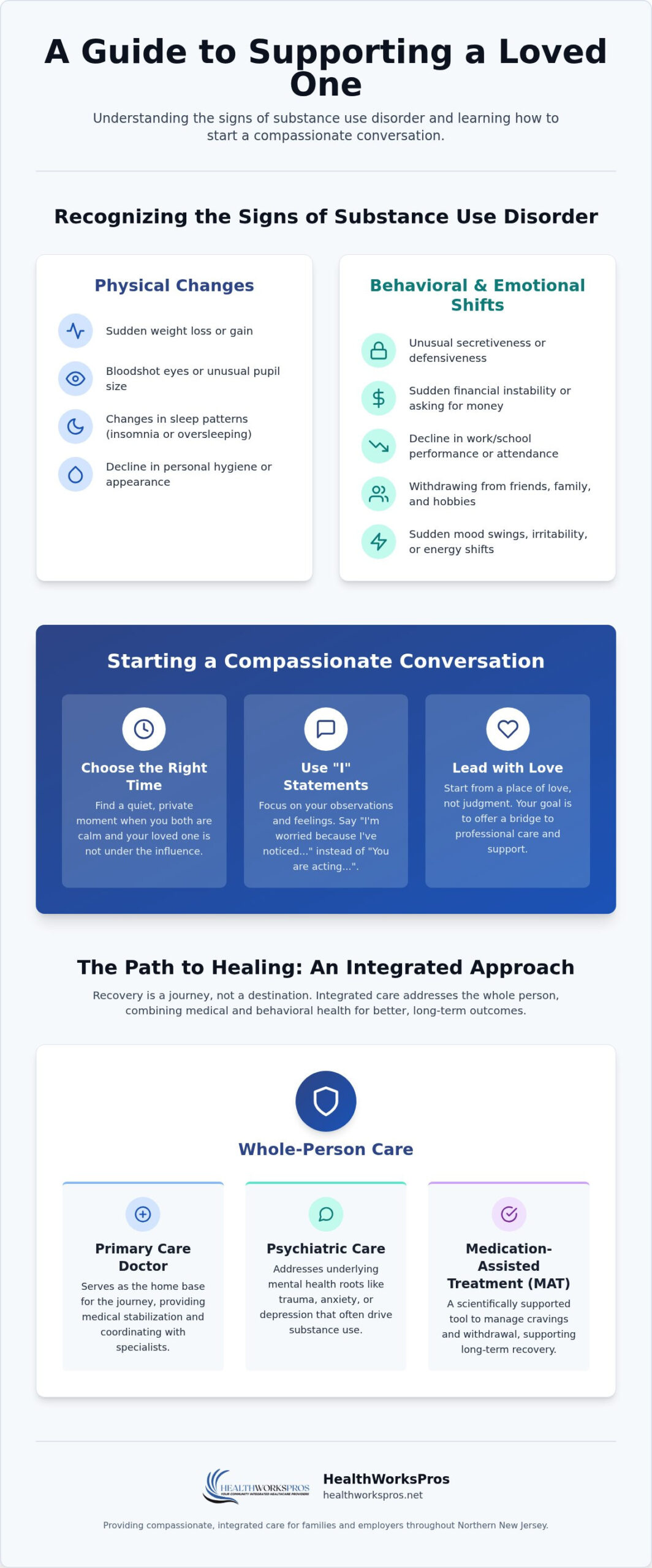
Identifying the signs of substance use disorder in a loved one starts with paying attention to small shifts in their daily life. You might notice physical changes that seem out of character. These can include sudden weight loss or gain, bloodshot eyes, or unusual sleep patterns. Sometimes, a person may stop caring about their personal hygiene or appearance. These physical markers are often the body’s way of reacting to a Substance Use Disorder.
Behavior often changes alongside physical health. Your loved one might become unusually secretive about where they go or who they’re with. Financial instability is another common red flag. You might notice they’re suddenly short on cash or asking for loans without a clear reason. In Essex County, we often see this show up as a decline in performance at work or school. They might stop showing up to local community events. Long-held hobbies often fall by the wayside as their priorities shift.
Subtle Emotional Shifts to Watch For
Emotional health is deeply connected to physical well-being. This is why we focus on Whole-Person Care at HealthWorksPros. You might notice sudden mood swings or bursts of energy that turn into deep exhaustion. Communication often changes too. A loved one might become defensive or avoid eye contact during serious talks. If you notice these signs of substance use disorder in a loved one, it’s a signal that they need support. You can reach out to us through our contact form to learn how we can help your family find a path forward.
How to Approach a Loved One Using the TRUST™ Framework
Approaching someone you love about their health is never easy. At HealthWorksPros, we use the TRUST™ framework to guide these delicate moments. This model prioritizes relationship-based care. It ensures your talk starts from a place of deep love instead of judgment. We look at the whole person, not just the addiction. This means we consider how underlying issues like anxiety or depression might coexist with the symptoms of substance use disorder.
Supportive navigation is key to this process. It helps your loved one feel they aren’t alone in their journey toward wellness. When you recognize the signs of substance use disorder in a loved one, the goal is to offer a bridge to professional care. You can start this process by requesting a confidential assessment through our team.
Starting a Compassionate Conversation
Timing matters as much as your words. Choose a quiet, private space when both of you feel calm. It’s best to talk when they aren’t under the influence. Use “I” statements to share what you’ve observed. For example, say, “I’m worried because I’ve seen you withdrawing lately,” rather than “You are acting differently.” This keeps the focus on your care for them.
Our team understands that family dynamics vary across the diverse communities of East Orange and Clifton. We provide culturally responsive support that respects your unique background. If you’re unsure how to begin, HealthWorksPros is here to help you navigate these first steps with dignity and respect. Recognizing the signs of substance use disorder in a loved one is the first step toward a healthier future for the whole family.
Navigating Integrated Treatment and Support in Northern New Jersey
Once you recognize the signs of substance use disorder in a loved one, the next step is finding the right level of care. In Northern New Jersey, we focus on a whole-person approach. This means we don’t just treat the addiction; we look at the person’s total health. Integrated psychiatric care in NJ plays a vital role here. It helps manage the mental health roots, like trauma or anxiety, that often drive substance use.
Your primary care doctor in East Orange serves as a home base for this journey. They provide medical stabilization and coordinate with specialists to ensure your loved one stays safe. For many, Medication-Assisted Treatment (MAT) is a powerful tool. It’s a scientifically supported way to manage cravings and support long-term recovery. This medical support is a key part of our connected healthcare ecosystem.
Why Integrated Care Leads to Better Outcomes
Recovery isn’t a straight line, and it shouldn’t be a lonely one. By combining physical health screenings with counseling, we ensure no part of the journey is ignored. Our model manages follow-up care and chronic health issues alongside SUD. This keeps the focus on long-term wellness rather than just a quick fix. It helps the individual stay stable while they work through behavioral changes.
HealthWorksPros supports the entire family through individual and group therapy. We provide a welcoming environment in Clifton and East Orange where you can find the tools to heal together. If you’ve noticed the signs of substance use disorder in a loved one, our team is ready to help you navigate the path to integrated support. You can start by reaching out through our confidential assessment form.
A Path Toward Healing and Hope for Your Family
Recognizing the signs of substance use disorder in a loved one is a brave first step. You now have the tools to observe physical and emotional changes with clarity. By using the TRUST™ framework, you can start a conversation that builds a bridge to professional support rather than a wall of judgment. Our integrated care model in East Orange and Clifton combines primary care with psychiatric support to treat the whole person. Our bilingual staff is here to ensure every family in Northern New Jersey feels seen and heard.
You don’t have to navigate this complex journey on your own. Our connected healthcare ecosystem provides the medical and behavioral health services needed for long-term stability. Take the first step toward healing by connecting with our compassionate care team today. There is always hope for recovery, and we’re dedicated to being your ally every step of the way.
Frequently Asked Questions
What are the first signs of substance use disorder I should look for?
The first signs of substance use disorder in a loved one often include subtle changes in their daily routine. You might notice they are suddenly withdrawing from family events or losing interest in long-held hobbies. Physical cues like bloodshot eyes, unexplained weight shifts, or disrupted sleep patterns are also common. Paying attention to these early shifts helps you offer support before the situation becomes more complex.
How do I talk to my loved one about their substance use without making them angry?
When you notice signs of substance use disorder in a loved one, starting a conversation requires a calm environment and a focus on Relationship-Based Care. Use “I” statements to share your observations without sounding like you are accusing them. Instead of saying “You have a problem,” try “I’m worried about you.” This approach helps lower defenses and shows your concern comes from a place of love.
Is substance use disorder considered a medical disease?
Is substance use disorder considered a medical disease?
You can find bilingual English and Spanish support at HealthWorksPros in East Orange. We serve families throughout Essex County and Passaic County with culturally responsive care. Our integrated team includes primary care doctors and psychiatric professionals who speak your language. This ensures that every member of our diverse Northern New Jersey community can access the high-quality medical and behavioral health services they deserve.

Article by
HealthWorksPros Clinical Editorial Team
This article was reviewed by the HealthWorksPros clinical and healthcare communications team. HealthWorksPros (HWP) is an integrated healthcare organization providing evidence-based primary care, behavioral health, psychiatry, counseling, occupational medicine, telehealth, and substance use treatment to individuals, families, employers, and communities throughout Northern New Jersey. Our content is created to educate and inform and is reviewed for medical accuracy using current clinical standards and trusted healthcare resources. While our articles provide general health information, they are not a substitute for personalized medical advice, diagnosis, or treatment. If you have questions about your health or need medical care, schedule an appointment with one of our healthcare providers.
Disclaimer
The information provided on this website is for general educational and informational purposes only and is not intended as medical advice, diagnosis, or treatment. Content is reviewed for accuracy at the time of publication but should not be considered a substitute for professional medical evaluation or personalized healthcare recommendations.
Always seek the advice of your physician or another qualified healthcare provider regarding any medical condition or before starting, stopping, or changing any treatment. Never disregard professional medical advice or delay seeking care because of information you have read on this website.
If you believe you are experiencing a medical emergency, call 911 or go to the nearest emergency department immediately.
Use of this website does not establish a physician-patient relationship with HealthWorksPros (HWP) or any of its providers. Appointment requests or communications submitted through this website do not guarantee the establishment of a provider-patient relationship until you have been evaluated and accepted for care in accordance with applicable laws and professional standards.