


A complete medication list should include every prescription, over-the-counter medicine, vitamin, supplement, herbal remedy, and non-pill medication your parent uses. When managing medications for elderly parents, record what each item is for, the dose, and when it’s taken. Keep the list current and bring it to healthcare appointments so the care team can review the full picture.
Keeping track can feel overwhelming, especially when medicines come from different appointments or routines change. A clear list and regular review make it easier to raise questions, share accurate information, and choose reminders that suit your parent. This guide explains how to organize medication details, review prescriptions safely, and compare reminder options, from a written log to a pill organizer or app.
Key Takeaways
- Bring prescription questions to a healthcare appointment, and don’t stop or change a medicine without medical guidance.
- Build one current list that includes prescriptions, nonprescription medicines, supplements, and how each is taken.
- Choose a reminder method that suits your parent’s routine, comfort with technology, and memory needs.
- Primary Health Care at HealthWorksPros can support conversations about your parent’s medications and overall health.
1. Medication reviews and reducing unnecessary prescriptions
When managing medications for elderly parents, caregivers can help pick up prescriptions and support daily doses. Follow the pharmacy’s pickup process and label directions. Keep your parent informed and involve them in decisions. Agree who records each dose, especially if memory makes routines harder. Don’t change a dose or stop a medicine without the prescriber’s guidance.
Ask a pharmacist to review the full medication list, including prescriptions, over-the-counter medicines, vitamins, and herbal supplements. They can identify possible interactions, duplicate treatments, or side effects to discuss with the prescriber. A prescribing cascade happens when a medicine’s side effect leads to another prescription, which can cause further side effects. Mention alcohol and grapefruit juice, too.
Taking four or more medicines can increase medication-related risks, including falls. Concerns may include doses that are too high or low, missed medicines, unnecessary treatments, and adverse reactions. A review can be especially useful after a hospital stay or appointment with another provider. The doctor can assess whether each prescription is still appropriate as health needs change.
If a dose is missed or the wrong medicine is taken, read the medication instructions and contact a pharmacist or healthcare provider for guidance. Don’t double a dose unless the label or clinician directs you to. A written log can help caregivers track doses and questions. If cost affects refills, tell the care team; drug companies and government programs may offer assistance.
2. Keeping a complete medication and supplement list
Start with one master list of every medicine your parent uses. Include prescriptions, over-the-counter medicines, vitamins, minerals, herbal remedies, supplements, and non-pill medicines such as inhalers or eye drops. For each item, record its name, dose, purpose, and how often it’s taken. Note whether the directions say to take it with food or at a specific time. A clear list gives healthcare providers the full picture, including products that may not appear in prescription records.
To declutter an older list, compare it with the current primary care record and the labels on medicine containers at home. Ask what each item is for and how it’s taken. Mark anything that appears on one source but not the other, then raise those differences with the care team. Don’t remove a medicine just because it seems outdated. Keep paper and digital copies; the Health in Aging Foundation recommends both so the information is ready to share.
Update the master list after every doctor’s appointment, emergency room visit, or hospital discharge. Add new medicines, record prescriptions that have been stopped or changed, and revise directions when the care team updates them. Include medicines added for a chronic condition or new symptoms before the next appointment. Bring the current version to every visit and share it with all healthcare providers, including physical therapists and dentists. This helps your parent and care team work from the same information instead of relying on memory or an old printout.
3. Pill organizers, reminder apps, and smart dispensers
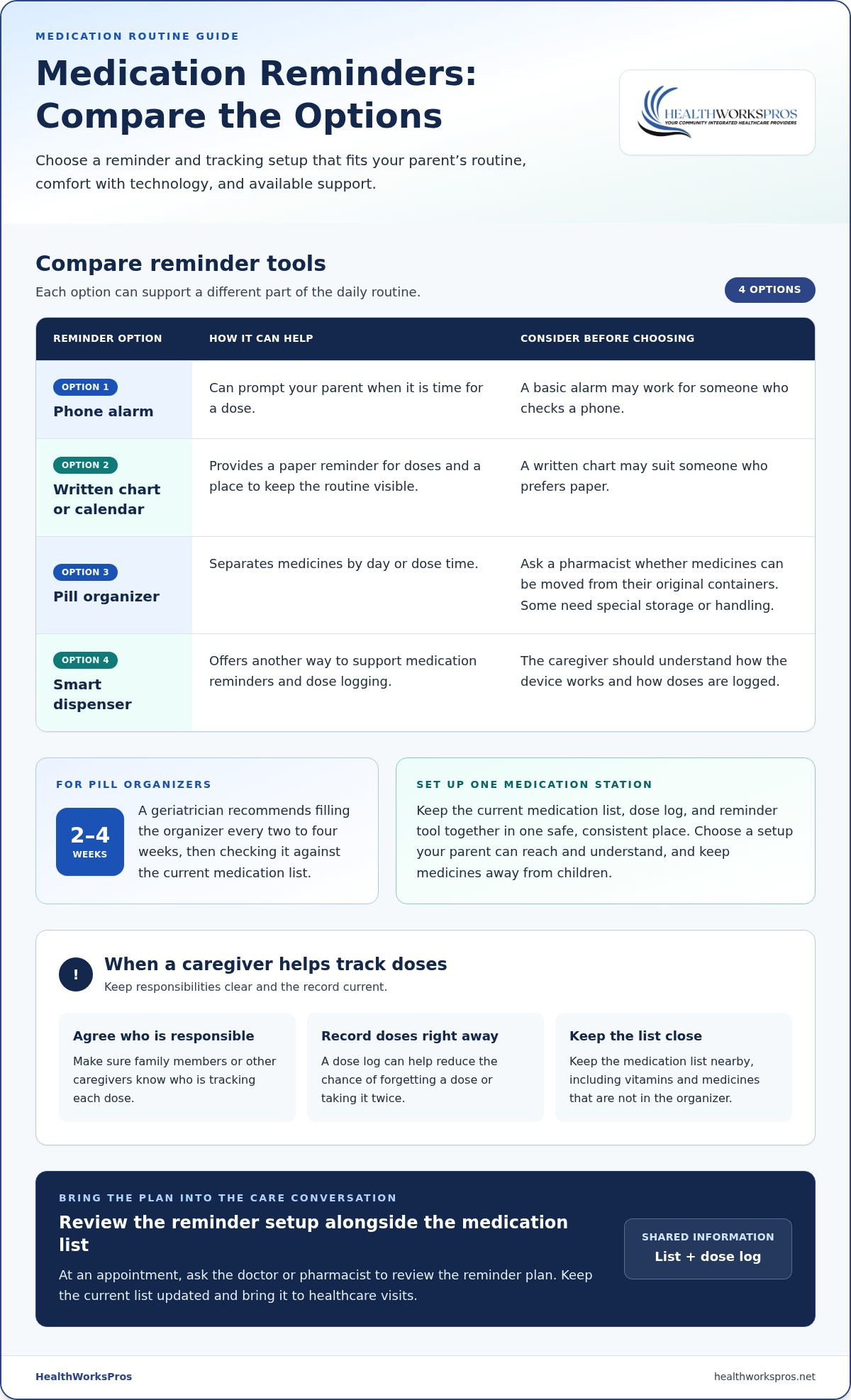
Set up a medication station in one safe, consistent place. Keep the current medication list, dose log, and reminder tool together. A phone alarm or written calendar can prompt doses, while a log records what was taken and when. Choose a setup your parent can reach and understand, and keep medicines away from children.
If your parent has memory loss or dementia, a trusted caregiver can help track doses and follow the care team’s instructions. Record each dose right away to reduce the chance of forgetting or taking it twice. Keep the medication list nearby, and make sure family members or other caregivers know who is responsible for each dose.
Pill organizers separate medicines by day or dose time. Before using one, ask a pharmacist whether the parent’s medicines can be moved from their original containers. Some medicines need special storage or handling. A geriatrician recommends filling pill organizers every two to four weeks, then checking the organizer against the current medication list.
Choose reminders that fit your parent’s routine and available support. A basic alarm may work for someone who checks a phone, while a written chart may suit someone who prefers paper. Smart dispensers are another option, but the caregiver should understand how the device works and how doses are logged. Keep vitamins and medicines that aren’t in the organizer visible on the medication list.
At the next appointment, ask doctors or the pharmacist to review the reminder plan alongside medicines for blood pressure and chronic conditions. If daily reminders need more hands-on support, explore in-home caregiver support.
HealthWorksPros: Primary Health Care
HealthWorksPros provides Primary Care in New Jersey, where your parent can discuss medication concerns as part of their overall health. Bring the current medication list and questions about directions, side effects, or changes in health to an appointment. A primary care visit gives the care team an opportunity to consider these concerns in context and discuss next steps.
Consider arranging a primary care visit if prescriptions have changed after a hospital stay, several providers are involved, or the medication routine has become difficult to manage. Families can also discuss how chronic conditions and new symptoms relate to the current treatment plan. HealthWorksPros provides Primary Care in New Jersey for older adults and their caregivers.
Take the Next Step With a Shared Care Plan
A clear routine can support your parent’s independence and help family members stay coordinated. When managing medications for elderly parents, agree on who will track changes, help with reminders, and bring questions to appointments. Involve your parent in these decisions as much as possible and respect their preferences about the support they receive.
HealthWorksPros provides Primary Care, where medication concerns can be discussed as part of your parent’s overall health. If you’re unsure what to raise first, write down the main concern and bring the current medication list to the appointment.
Small, shared steps can make the routine easier to manage together.
Frequently Asked Questions
What Goes on the List?
Include every medicine or health product your parent currently uses, even if it isn’t taken daily. Make clear which items are current and which have been stopped or replaced. If a container and written directions conflict, note the mismatch and bring both to the care team. Don’t decide on your own which instruction is correct.
What is Medication Management?
Medication management means organizing treatment and coordinating medication information as health needs or care teams change. It can include helping someone understand directions and prepare questions. Caregivers can support communication, but shouldn’t make prescription changes on their own. Discuss treatment decisions with the prescribing professional.
How can I create an up-to-date medication list for an elderly parent?
Choose one master copy and date it so everyone knows which version is current. When a clinician changes treatment, record what changed and who gave the new instructions. For example, note whether a medicine was stopped or its directions were revised. This makes later questions easier to answer without relying on memory.
How can I organize medications and help an older adult take them on schedule?
Choose a reminder your parent can use comfortably. Consider whether they can read a printed schedule, hear an alarm, or use a phone without help. Someone with memory loss may need direct caregiver support rather than an alert alone. Involve your parent in choosing a routine whenever possible.
What medication management tools are available for seniors, and how much do they cost?
Options include paper schedules, phone alarms, pill organizers, and automated dispensers. Compare a device’s one-time cost with any recurring service fee before choosing. Consider whether its features fit the daily routine and whether someone can help operate it. A simpler option may be more practical if the advanced features won’t be used.

Article by
HealthWorksPros Clinical Editorial Team
This article was reviewed by the HealthWorksPros clinical and healthcare communications team. HealthWorksPros (HWP) is an integrated healthcare organization providing evidence-based primary care, behavioral health, psychiatry, counseling, occupational medicine, telehealth, and substance use treatment to individuals, families, employers, and communities throughout Northern New Jersey. Our content is created to educate and inform and is reviewed for medical accuracy using current clinical standards and trusted healthcare resources. While our articles provide general health information, they are not a substitute for personalized medical advice, diagnosis, or treatment. If you have questions about your health or need medical care, schedule an appointment with one of our healthcare providers.
Disclaimer
The information provided on this website is for general educational and informational purposes only and is not intended as medical advice, diagnosis, or treatment. Content is reviewed for accuracy at the time of publication but should not be considered a substitute for professional medical evaluation or personalized healthcare recommendations.
Always seek the advice of your physician or another qualified healthcare provider regarding any medical condition or before starting, stopping, or changing any treatment. Never disregard professional medical advice or delay seeking care because of information you have read on this website.
If you believe you are experiencing a medical emergency, call 911 or go to the nearest emergency department immediately.
Use of this website does not establish a physician-patient relationship with HealthWorksPros (HWP) or any of its providers. Appointment requests or communications submitted through this website do not guarantee the establishment of a provider-patient relationship until you have been evaluated and accepted for care in accordance with applicable laws and professional standards.