


What if the needles aren’t the part you notice most? If you’re wondering what does acupuncture feel like, it’s natural to have questions about pain or unfamiliar sensations. Experiences vary: you might feel a brief prick or mild pressure, notice tingling or warmth, or feel very little. If you notice sharp or strong discomfort, speak up.
A first session usually starts with a conversation about your health and questions before treatment begins. Knowing the general steps can help you feel prepared, but there isn’t one sensation everyone should expect.
This guide explains what you may feel when needles are placed and while you rest, what typically happens during a session, and how to share concerns with the practitioner. It also covers possible short-term effects afterward and practical ways to prepare.
Key Takeaways
- Learn what does acupuncture feel like, while remembering that sensations vary from person to person.
- Understand the usual steps in a session, from an initial discussion to needle placement and check-ins.
- You can ask questions, report discomfort, or request a pause during treatment.
- Prepare to discuss your health information and ask whether acupuncture may fit your individual situation.
What does acupuncture feel like? Common sensations explained
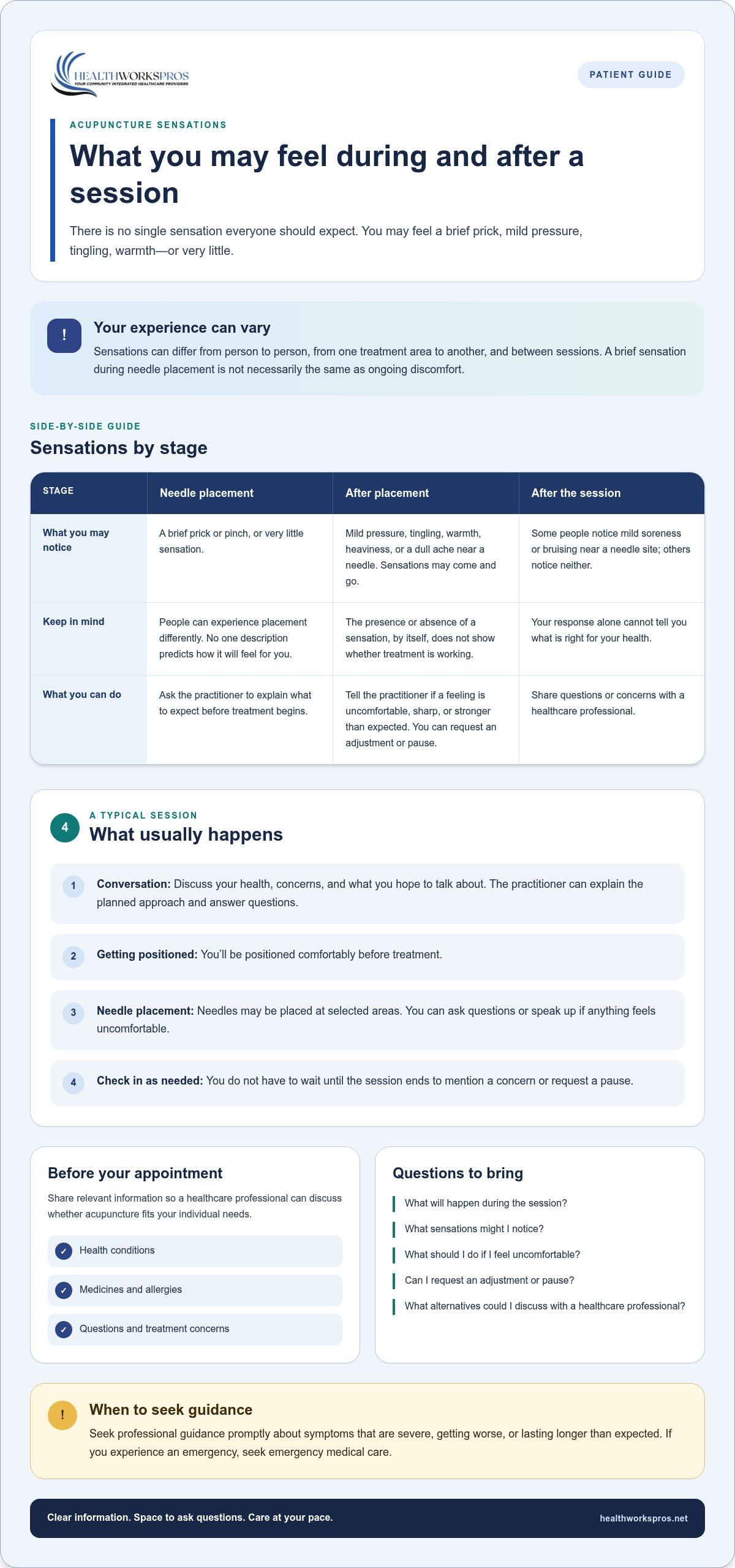
There isn’t one feeling everyone should expect. If you’re asking what does acupuncture feel like, you may notice a brief prick or pinch as a needle is placed, or feel very little. Sensations can also vary during the same session, so another person’s description may not match your experience.
After placement, some people notice mild pressure, tingling, warmth, heaviness, or a dull ache near a needle. These sensations may come and go. Their presence or absence doesn’t, by itself, show whether treatment is working. Acupuncture has traditional and modern perspectives; this overview of acupuncture provides background on its history and approaches.
The treatment area may affect what you notice, and your response can differ from one session to another. A brief sensation during placement isn’t necessarily the same as ongoing discomfort. You don’t have to stay quiet or push through a feeling that concerns you.
Do acupuncture needles hurt or feel unusual?
A needle may cause a momentary prick, pinch, or unfamiliar sensation. Some people find placement mild, while others feel more aware of it. Neither response is unusual, and no single description can predict how it will feel for you.
Acupuncture sensations differ because each person, treatment area, and session can feel different. If a sensation feels uncomfortable, sharp, or stronger than you expected, tell the practitioner. You can ask a question, request an adjustment, or ask to pause at any point.
What happens during an acupuncture session, and how might you feel afterward?
A session generally begins with a conversation about your health, concerns, and what you hope to discuss. The practitioner can explain the planned approach and answer your questions. You’ll then be positioned comfortably, and needles may be placed at selected areas. You can speak up during treatment if anything feels uncomfortable or you want a pause.
You don’t need to wait until the session ends to mention a concern. For example, if pressure changes into a sharp or uncomfortable feeling, tell the practitioner. You can also ask what to expect before treatment begins. The National Cancer Institute’s Acupuncture overview provides medical context about the practice and sensations people may report.
People can feel different after a session. Some may notice mild soreness or bruising near a needle site; others may not notice these effects. Your response alone can’t tell you what’s right for your health. If you have questions, share them with a healthcare professional.
Which sensations after acupuncture are worth discussing?
Seek professional guidance promptly about symptoms that are severe, getting worse, or lasting longer than expected. This information is general and can’t determine the cause of a symptom or whether it needs treatment. If you experience an emergency, seek emergency medical care.
If you’re exploring acupuncture for chronic pain management, learn about HealthWorksPros acupuncture care and consider what questions you’d like to bring to a conversation about your care.
How to Prepare for Acupuncture and What to Ask
A little preparation can make the conversation more useful and help you feel at ease. Before your appointment, think about what you hope to understand, any concerns you have, and what would help you feel comfortable speaking up. If you’re still wondering what does acupuncture feel like, ask what sensations people may notice and how the practitioner will check in during treatment.
What can you ask before your first acupuncture appointment?
Questions can help you understand the process and decide what feels right for you. Consider asking:
- What will happen during the session, and how will you explain each step?
- What sensations might I notice, and what should I do if I feel uncomfortable?
- Can I ask for an adjustment or pause at any point?
- How will my health history affect whether acupuncture may suit my situation?
- What alternatives could I discuss with a healthcare professional?
Share relevant health information, including health conditions, medicines, allergies, and concerns about treatment. This context can help a healthcare professional discuss whether acupuncture fits your individual needs. If you are exploring complementary therapies for joint discomfort, independent resources such as livingwitharthritis.org.uk provide helpful guides on managing chronic symptoms alongside conventional care. Be open about your expectations, too. You don’t need to know every question in advance, and it’s okay to ask for clarification as you go.
For more pain-related context, read HealthWorksPros’ acupuncture guide for chronic pain. HealthWorksPros provides acupuncture for chronic pain management in New Jersey. To discuss the service, contact HealthWorksPros.
Choose a Next Step That Feels Right for You
A treatment decision can take time, and you’re allowed to move at your own pace. The question “what does acupuncture feel like” can be a starting point, but your comfort, health needs, and personal preferences matter too. Consider what information would help you feel ready to decide, and bring those questions to a healthcare professional.
HealthWorksPros provides acupuncture for chronic pain management in New Jersey. If you’d like to learn more or discuss your questions, contact HealthWorksPros.
Frequently Asked Questions
Does acupuncture hurt?
It may feel uncomfortable for some people, so a pain-free experience can’t be guaranteed. If needles make you anxious, mention that before treatment and ask the practitioner to explain what will happen before starting. You can also discuss any past reaction to needles or medical procedures with a clinician, who can help you consider your concerns in light of your health needs.
What do acupuncture needles feel like?
A needle may cause a quick prick or a sense of pressure. To get a clearer idea of what acupuncture might feel like for you, ask the practitioner what you may notice at the areas being treated. That conversation can help set expectations without assuming your experience will match someone else’s.
Can you feel acupuncture needles after they are inserted?
You may or may not remain aware of a needle once it’s in place. If you’re unsure whether a needle is still there or what’s happening next, ask the practitioner to explain rather than trying to check or adjust it yourself. A clear explanation can help you stay informed throughout the session.
How might you feel after acupuncture?
There’s no single response to expect afterward. If something concerns you, note when it began, how it changes, and any other details that may help a healthcare professional understand your concern. Seek prompt medical advice for severe or persistent symptoms. For urgent symptoms, seek emergency care rather than waiting for a routine appointment.

Article by
HealthWorksPros Clinical Editorial Team
This article was reviewed by the HealthWorksPros clinical and healthcare communications team. HealthWorksPros (HWP) is an integrated healthcare organization providing evidence-based primary care, behavioral health, psychiatry, counseling, occupational medicine, telehealth, and substance use treatment to individuals, families, employers, and communities throughout Northern New Jersey. Our content is created to educate and inform and is reviewed for medical accuracy using current clinical standards and trusted healthcare resources. While our articles provide general health information, they are not a substitute for personalized medical advice, diagnosis, or treatment. If you have questions about your health or need medical care, schedule an appointment with one of our healthcare providers.
Disclaimer
The information provided on this website is for general educational and informational purposes only and is not intended as medical advice, diagnosis, or treatment. Content is reviewed for accuracy at the time of publication but should not be considered a substitute for professional medical evaluation or personalized healthcare recommendations.
Always seek the advice of your physician or another qualified healthcare provider regarding any medical condition or before starting, stopping, or changing any treatment. Never disregard professional medical advice or delay seeking care because of information you have read on this website.
If you believe you are experiencing a medical emergency, call 911 or go to the nearest emergency department immediately.
Use of this website does not establish a physician-patient relationship with HealthWorksPros (HWP) or any of its providers. Appointment requests or communications submitted through this website do not guarantee the establishment of a provider-patient relationship until you have been evaluated and accepted for care in accordance with applicable laws and professional standards.